
Execution Problems Slowing Your Organization Down?

As organizations grow, execution becomes more complex. Teams work harder, but progress becomes harder to predict. These challenges often signal deeper alignment and coordination issues across teams.
 
Innolance helps leadership teams identify and address the systemic factors that slow delivery and create unnecessary execution risk.

Why Execution Problems Emerge

Many organizations reach a point where execution begins to feel harder than it should.
Despite capable teams and strong intentions, leaders start noticing patterns such as:
• Initiatives taking longer than expected
• Teams appearing busy but outcomes remaining inconsistent
• Coordination across teams becoming increasingly difficult
• Delivery timelines becoming harder to predict
• Leadership lacking clear visibility into execution challenges
 
These problems rarely come from lack of effort.
They usually emerge when organizational complexity grows faster than execution clarity.

Common Execution Challenges We Help Leaders Address

Delivery Feels Slower Than Expected

Even when teams are working hard, progress across initiatives begins to feel slower and less predictable.
This often happens when priorities, planning practices, and coordination mechanisms are no longer aligned with the scale of the organization.
Over time, this creates a cycle of constant pressure without clear delivery momentum.

Teams Are Busy but Outcomes Remain Inconsistent

Leaders frequently see teams working intensely, yet results vary from quarter to quarter.
This often indicates that teams are operating without sufficient clarity around priorities, capacity, or dependencies.
Without addressing these systemic issues, increasing effort rarely produces better outcomes.

Coordination Across Teams Is Creating Friction

As organizations grow, work increasingly spans multiple teams.
Without clear coordination mechanisms, dependencies become difficult to manage and delivery timelines become unpredictable.
Small coordination gaps can quickly compound into significant delivery delays.

Leaders Lack Visibility Into Execution Health

Many leadership teams rely on status updates or high-level reporting to understand progress.
However, these signals often fail to reveal the underlying conditions affecting execution.
Without deeper insight into delivery stability and organizational alignment, leaders struggle to identify where intervention is most needed.

Strategic Initiatives Take Longer Than Planned

Organizations often find that strategic initiatives consistently take longer than expected to deliver.
While individual teams may perform well, the overall system supporting execution may lack the clarity needed to move initiatives forward efficiently.

Addressing Execution Problems Requires System-Level Insight

When these challenges appear, organizations often attempt solutions such as:
• introducing new tools
• adding additional processes
• restructuring teams
• increasing oversight
While these actions can help in some cases, they often treat symptoms rather than root causes.
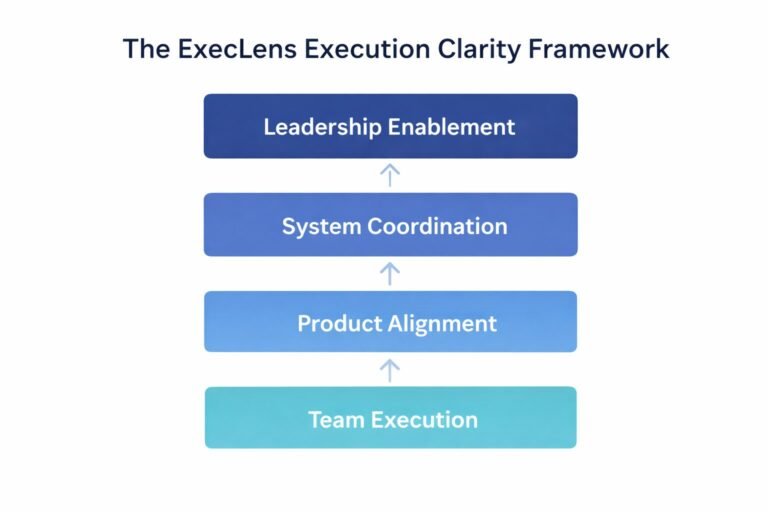
Execution clarity is influenced by multiple factors across teams, leadership decisions, and organizational structures.
Understanding these factors requires a structured diagnostic approach.

Start With the Execution Clarity Assessment

Innolance begins by helping leaders understand how execution currently operates across teams.
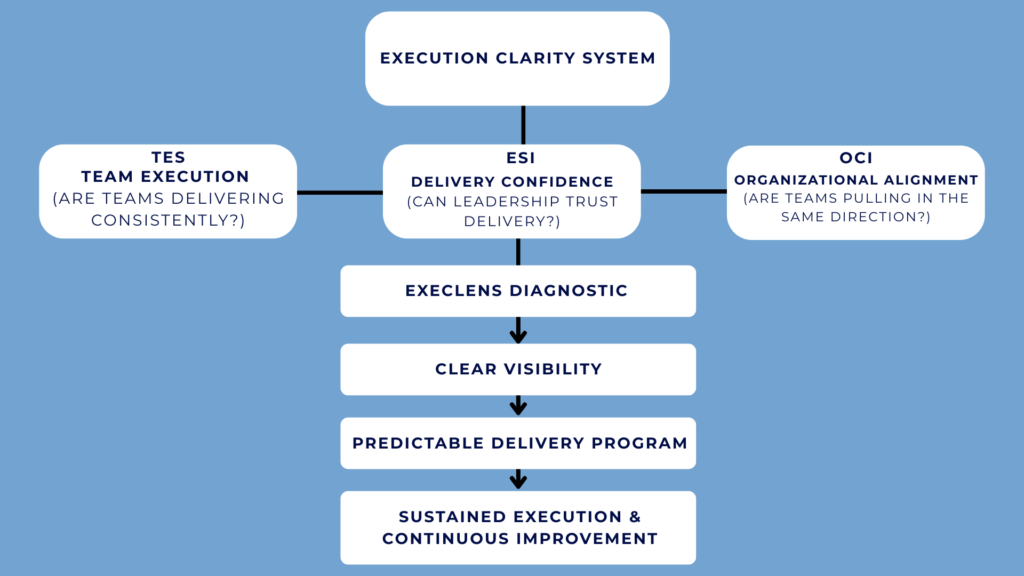
The Execution Clarity Assessment (ECA) evaluates:
• Team Execution Stability
• Execution Risk Exposure
• Organizational Clarity
This diagnostic helps leaders identify where delivery challenges originate and which improvements will create the greatest impact.

Moving Forward: The Predictable Delivery Program

Based on insights from the assessment, organizations can address execution challenges through the Predictable Delivery Program (PDP).
The program helps leadership teams improve alignment, strengthen delivery flow, and build clearer visibility into execution health across teams.

Take the First Step

If your organization is experiencing execution challenges similar to the ones described here, the first step is a short conversation.
We’ll discuss your current situation and determine whether the Execution Clarity Assessment is the right starting point.