
Why Software Delivery Feels On Track Until It Slips: Hidden Causes of Unpredictable Delivery
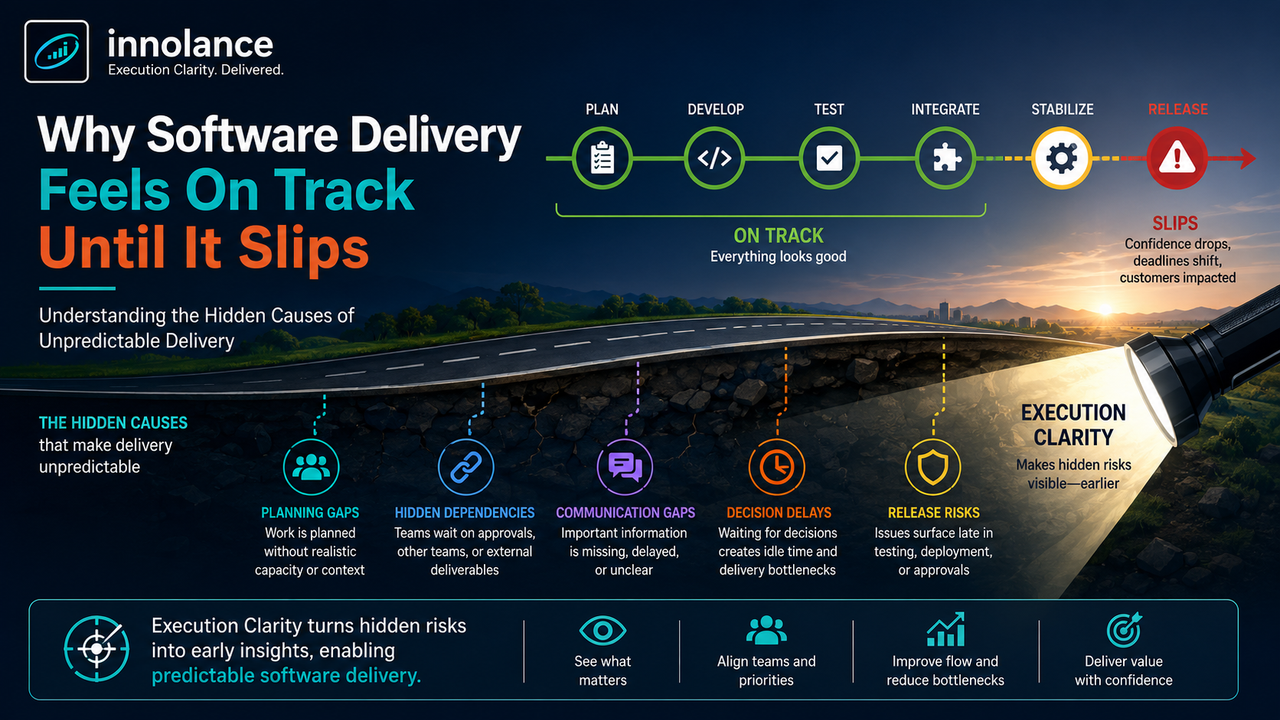
Discover why software delivery can appear on track until hidden planning gaps, dependencies, and execution risks cause delays, and learn how Execution Clarity improves delivery predictability.
Why Software Delivery Feels On Track Until It Slips: Understanding the Hidden Causes of Unpredictable Delivery
Executive Summary
Software delivery rarely becomes unpredictable overnight. As organizations grow, increasing complexity, cross-functional dependencies, and limited execution visibility make it difficult to identify risks before they affect delivery. By improving Execution Clarity the ability to understand where execution is breaking down and why leaders can detect hidden constraints earlier, strengthen collaboration, and improve software delivery predictability.
Why Does Software Delivery Feel On Track Until It Slips?
Software delivery often feels on track because traditional project metrics measure completed work rather than the health of execution. While sprint goals, project dashboards, and milestone reports may indicate progress, they rarely reveal hidden planning gaps, unmanaged dependencies, delayed decisions, or collaboration bottlenecks. As these issues accumulate, delivery confidence declines, release dates shift, and projects that once appeared healthy become difficult to predict.
For software delivery leaders at startups, SMBs, and mid-market SaaS companies, maintaining software delivery predictability requires more than tracking progress. It requires visibility into how planning, execution, handoffs, and release readiness influence delivery performance throughout the software development lifecycle.
Why Does Planning Determine Delivery Predictability?
Software delivery challenges often begin long before development starts. Product roadmaps are frequently built around ambitious business objectives, customer expectations, and market deadlines without fully considering engineering capacity, competing priorities, or technical complexity. While these plans may appear achievable, execution becomes increasingly difficult when delivery commitments exceed organizational capability.
Effective agile planning is more than managing sprint backlogs or scheduling releases. It requires aligning business priorities with realistic delivery capacity while ensuring product, engineering, and leadership teams share a common understanding of objectives, trade-offs, and success criteria. When planning lacks alignment, delivery risks accumulate throughout execution and often remain hidden until release schedules begin to slip.
Key Takeaway: Predictable software delivery begins with realistic planning that aligns business priorities with organizational capacity.
How Do Hidden Handoffs and Dependencies Slow Delivery?
Modern software delivery depends on collaboration across engineering, product management, quality assurance, security, infrastructure, and operations. Although individual teams may perform effectively, work often slows as it moves between functions. These handoffs create delays that traditional project tracking rarely captures.
Many project management challenges occur because dependencies remain unmanaged or invisible. Teams frequently wait for approvals, shared environments, technical reviews, or external decisions before work can continue. Over time, these delays compound, creating delivery bottlenecks that only become visible as release deadlines approach.
Organizations that improve visibility into cross-functional dependencies are better positioned to identify execution risks early and maintain consistent delivery across the software development lifecycle.
Key Takeaway: Software delivery rarely slows because one team underperforms it slows when work cannot move efficiently across teams.
How Does Execution Visibility Improve Delivery Reliability?
Many organizations rely on sprint velocity, completed story points, or status reports to evaluate progress. While these metrics help measure activity, they do not always indicate whether delivery remains predictable. Projects can appear healthy even as hidden execution issues continue to grow beneath the surface.
Execution Clarity the ability to understand where execution is breaking down and why helps leaders identify bottlenecks earlier, strengthen alignment, and make informed decisions before delivery is impacted. By improving visibility into delivery progress, dependency health, and cross-functional collaboration, organizations can detect risks sooner and improve delivery confidence before customer commitments are affected.
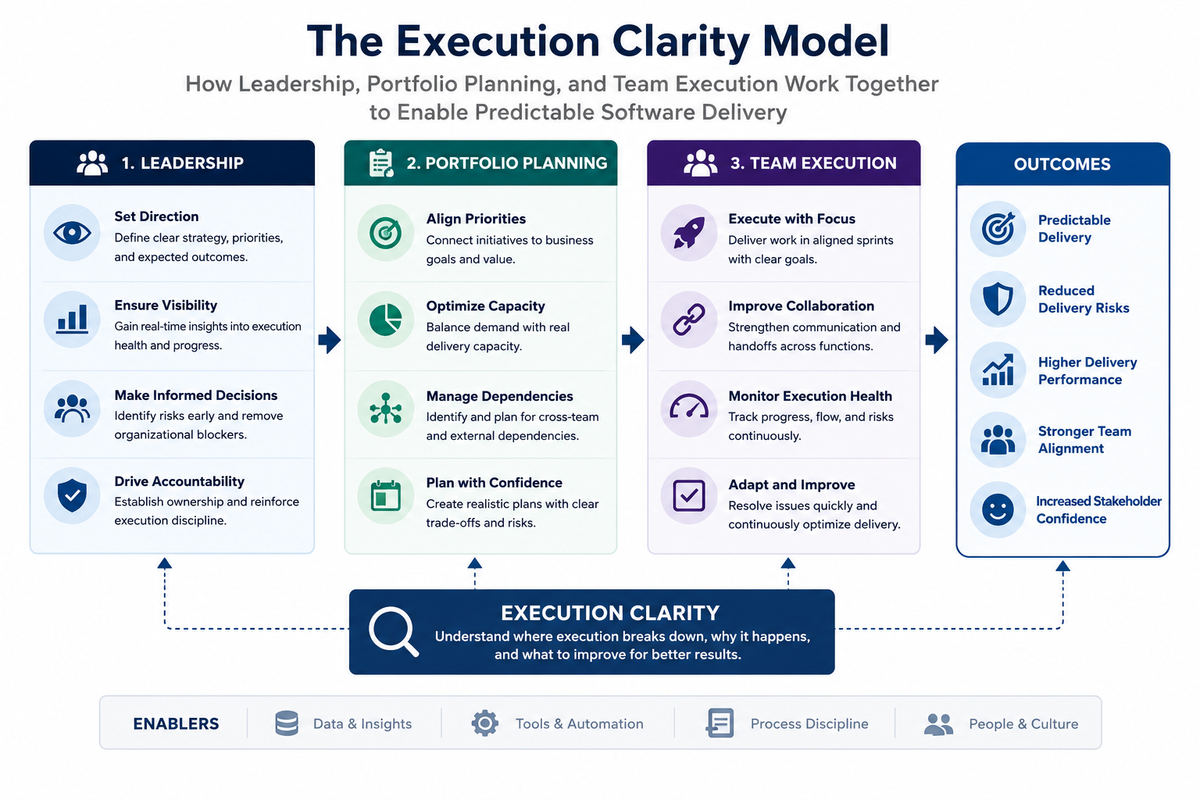
Key Takeaway: Greater execution visibility enables leaders to identify risks earlier and improve software delivery predictability.
How Does Release Management Reveal Earlier Execution Problems?
Release management is often where hidden execution challenges become visible. Incomplete testing, unresolved defects, deployment readiness issues, approval delays, and infrastructure dependencies frequently emerge during the final stages of delivery. Although these problems appear late in the process, they usually originate much earlier during planning or execution.
Continuous risk assessment throughout the software development lifecycle enables organizations to identify these issues before they disrupt release schedules. Rather than waiting until deployment to evaluate delivery readiness, leaders should continuously monitor execution health to reduce uncertainty and improve delivery forecasts.
Organizations can further strengthen this approach by improving Execution Clarity across planning, execution, and release management, enabling earlier identification of delivery constraints before they become business risks.
Key Takeaway: Most release delays are symptoms of execution challenges that developed long before release management began.
How Can Execution Clarity Improve Software Delivery Predictability?
Organizations seeking consistent software delivery must look beyond project tracking and understand the conditions influencing execution. Improving visibility into planning, dependencies, leadership decisions, and release readiness provides a more complete view of organizational performance and helps leaders make proactive decisions before delivery is impacted.
Rather than responding to delays with additional meetings or new delivery frameworks, successful organizations focus on identifying and removing the constraints affecting execution. This enables stronger cross-functional collaboration, more informed planning, and continuous improvement across the software development lifecycle.
Learn more about how Innolance helps organizations improve delivery through its Predictable Delivery Program (PDP).https://innolance-website-phi.vercel.app/studio/structure/knowledgePlatform;blog;allPosts;ac8586a3-5b4b-49c6-8d9f-dfe2f8e80601
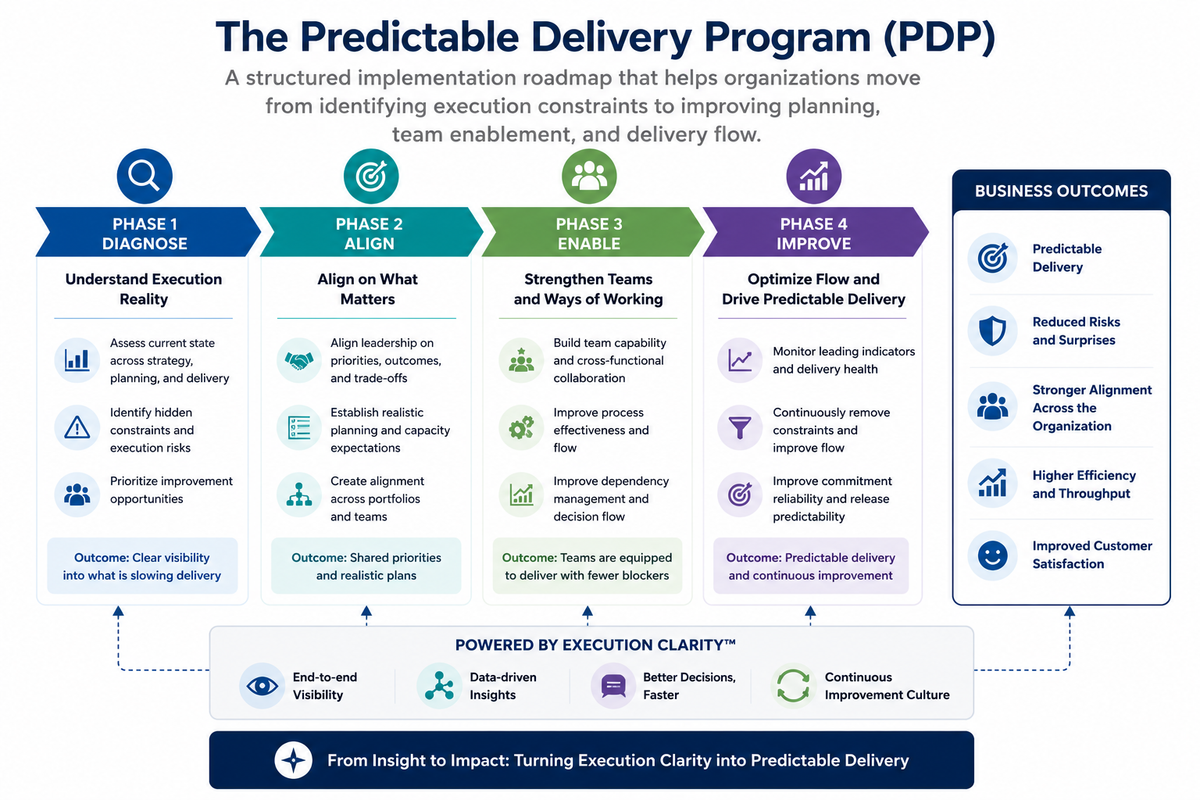
Practical Tip: Before introducing additional processes or delivery frameworks, first identify the organizational constraints limiting software delivery predictability. Improving visibility into execution often delivers greater results than simply adding more process.
Conclusion
Software delivery rarely becomes unpredictable because teams stop performing. More often, predictability declines because organizational complexity hides the factors affecting planning, execution, handoffs, and release readiness. Without visibility into these hidden constraints, even projects that appear healthy can quickly fall behind schedule.
Organizations that improve software delivery predictability focus on understanding execution across the entire software development lifecycle not just sprint metrics or project dashboards. By strengthening planning alignment, improving collaboration, continuously assessing delivery risks, and increasing execution visibility, leaders can reduce uncertainty and improve delivery reliability.
At Innolance, Execution Clarity helps organizations understand where execution is breaking down, identify the root causes of delivery constraints, and prioritize practical improvements that lead to more predictable software delivery. By addressing problems before they impact business outcomes, leaders can improve delivery confidence and build sustainable execution performance as their organizations continue to grow.