
Seeing What Teams Can't: Finding Execution Bottlenecks Through Workflow Analysis
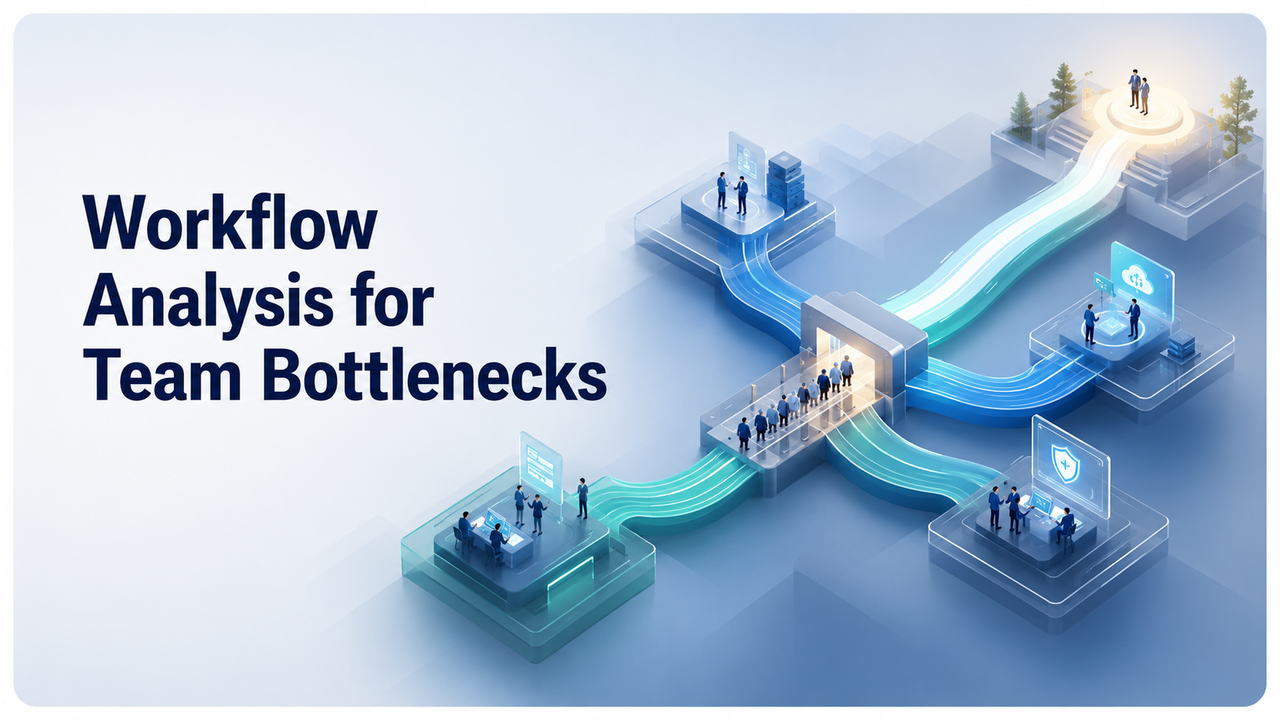
How workflow analysis helps leadership teams uncover hidden execution bottlenecks before they impact business performance
Executive Summary
Software delivery rarely becomes unpredictable overnight. The warning signs usually appear gradually. Release dates begin to move more often, leadership meetings spend more time reviewing status, and teams devote increasing effort to coordination instead of delivery.
Each change may seem manageable on its own. Together, however, they create a growing gap between organizational effort and business outcomes.
As a company expands, the path from idea to delivery becomes more complicated. More teams participate in each initiative. Approvals increase. Priorities compete for attention. Decisions pass through additional stakeholders. Leaders can still see that people are busy, but it becomes harder to understand where work is progressing and where it is waiting.
Workflow analysis provides that missing visibility. It shows how work moves across teams, approvals, systems, and decision points. By examining the complete delivery journey, leaders can identify execution bottlenecks earlier and make focused improvements before delays affect customers or strategic commitments.
Delivery Slows in Places Leaders May Not See
When delivery performance declines, leaders often look first at the department closest to the work.
Engineering may appear overloaded. Product may seem to change priorities too frequently. Quality Assurance may struggle to complete testing before a release. These explanations are understandable because they focus on visible activity within individual teams.
The real constraint, however, may exist somewhere else.
Consider a SaaS company preparing a quarterly product release. Engineering completes development according to plan. Product continues refining the roadmap. Customer Success communicates expected delivery dates to customers. When each department is reviewed separately, performance appears acceptable.
The complete workflow reveals a different picture.
Features wait several days for architectural approval. Security reviews take place only once a week. Deployment depends on a small operations team that is already supporting several other initiatives. No single department is failing, but the handoffs between them are slowing the release.
This distinction is important. Improving the productivity of one team will not resolve a constraint created by approvals, dependencies, or unclear ownership. Leaders must understand how work moves across the organization before they can address the real source of delay.
Growth Changes How Work Moves
Informal coordination works well when an organization is small. Team members know who makes each decision, priorities are easier to clarify, and problems can often be resolved through a short conversation.
As organizations grow, that environment naturally changes.
Additional products require more specialized teams. Customer commitments increase. Governance becomes more structured. More stakeholders participate in important decisions. Each of these changes supports growth, but together they reshape how work moves through the organization. The delivery process becomes more interconnected, and small delays begin to accumulate across multiple teams.
Leadership often notices these changes before traditional performance reports show a measurable decline. Some examples of these early signals include:
- Planning meetings take longer before teams reach clear decisions.
- Projects remain active even though meaningful progress has slowed.
- The same dependencies begin appearing across multiple initiatives.
- Teams repeatedly wait for the same approvals or specialist resources.
- Ownership becomes less clear as work moves between departments.
Individually, these signals may not seem significant. Together, they often indicate that organizational complexity is beginning to affect execution. Treating each delay as a separate operational issue may provide temporary relief, but it rarely addresses the underlying constraint.
Workflow analysis connects these patterns across the organization. It helps leadership determine whether different projects are being slowed by the same approval process, decision point, dependency, or capacity constraint, making it easier to prioritize improvements that will have the greatest business impact.
Activity Does Not Always Show Progress
Many organizations already collect large amounts of delivery data. Dashboards report sprint velocity, completed stories, project status, resource allocation, and team capacity.
These metrics show what teams are doing, but they do not always show how efficiently work is moving.
A project can remain active while spending most of its time waiting. A team can complete a large number of tasks without moving the most important initiative closer to delivery. A dashboard can show several projects as on track even though each one depends on the same overloaded approval group.
Workflow analysis shifts attention from activity to movement.
Leaders begin examining where work pauses, how long decisions take, which dependencies occur repeatedly, and how often work returns to an earlier stage.
The most useful signals often include:
- Approval stages where work regularly accumulates
- Team handoffs that produce recurring delays
- Rework caused by unclear requirements or changing priorities
- Decisions that depend on a small number of people
- Projects that remain open after meaningful progress has slowed
- Dependencies that affect several initiatives at the same time
A single delay may not appear significant. Repeated delays at the same stage reveal a structural constraint that can affect the entire delivery system.
A Practical Approach to Workflow Analysis
Effective workflow analysis does not require an immediate redesign of every process. It begins with a clear view of how work currently moves.
1. Follow the Complete Delivery Journey
Select a recent project, feature, or customer request and trace it from the initial idea to final delivery.
Document each major stage, including planning, design, development, review, approval, testing, deployment, and customer release. Include the moments when work changes owners or moves between teams.
The goal is to understand the complete path to value, not simply the responsibilities of each department.
2. Measure Waiting Time
Delivery time includes both active work and waiting.
A feature may require three days of development but spend two weeks waiting for approval, clarification, testing, or deployment. If reporting measures only development effort, the largest source of delay remains hidden.
Record how long work stays at each stage and separate active work from waiting time. This makes it easier to see whether the constraint is related to capacity, decision making, ownership, or coordination.
3. Look for Repeated Patterns
One delayed project may reflect unusual circumstances. Several projects slowing at the same stage indicate a broader issue.
Compare recent initiatives and identify where delays occur repeatedly. Look for the same approval group, dependency, decision maker, or handoff across multiple projects.
Repeated patterns provide stronger evidence than isolated examples and help leadership decide which constraint deserves attention first.
4. Review the Findings with the Teams Involved
Workflow data shows where work slows. The people closest to the process can often explain why.
Product, Engineering, Operations, Security, and Delivery leaders may identify outdated approval rules, conflicting priorities, missing information, or unclear ownership that is not visible in executive reporting.
These discussions should focus on understanding the process rather than assigning blame. The objective is to improve how the system operates across teams.
5. Address the Primary Constraint First
Trying to improve every part of the workflow at once often creates more complexity.
Leadership should begin with the constraint that has the greatest effect on delivery. This may involve simplifying one approval process, clarifying ownership at a critical handoff, expanding access to a specialist, or reducing a recurring dependency.
A focused change at the right point can improve several projects at the same time.
What Strong Leadership Teams Recognize Earlier
Organizations with predictable delivery are not always less complex. They are often better at recognizing when complexity begins to interfere with execution.
Their leadership conversations move beyond project status. Instead of asking only whether an initiative is on track, leaders examine where work is waiting, which decisions are slowing progress, and whether the same constraints are affecting other priorities.
This changes the quality of management decisions.
Leaders can address an overloaded approval group before it delays several releases. They can clarify ownership before a handoff creates rework. They can adjust priorities before teams spend weeks supporting initiatives that no longer have the same business value.
Teams also spend less time preparing status explanations. They can focus more attention on resolving the operational conditions that influence delivery.
This is where execution clarity becomes a practical leadership capability. It gives decision makers a clearer view of how strategy moves through the organization and where intervention will have the greatest effect.
Turning Workflow Visibility into Better Delivery
Workflow analysis should lead to specific operational improvements.
If architectural reviews repeatedly delay releases, the organization may need clearer review criteria, additional reviewers, or earlier involvement from architecture leaders.
If projects slow when they move from Product to Engineering, the issue may be incomplete requirements or unclear acceptance criteria.
If deployment depends on a small operations team, leadership may need to reconsider capacity, automation, or release scheduling.
The right response depends on the constraint. The value of workflow analysis is that it allows leadership to make that decision using evidence from the complete delivery process.
Over time, this creates a more predictable operating environment. Teams understand how work should move. Leaders recognize risks earlier. Customers receive more reliable commitments.
Final Perspective
Workflow analysis is more than a process improvement exercise. It gives leadership a practical view of the execution system behind every product release, customer commitment, and strategic initiative.
Organizations rarely struggle because their teams stop working hard. Delivery becomes unpredictable when growth makes the movement of work harder to see. Approvals, dependencies, competing priorities, and unclear ownership gradually create friction across the organization.
Leaders who understand these patterns can focus improvement efforts where they will matter most. They can identify bottlenecks earlier, improve coordination across teams, and create more reliable delivery outcomes without asking every department to work faster.
This is the purpose of Execution Clarity. It helps leadership understand what is happening across the delivery system, identify the conditions causing delays, and determine what should improve next.
Frequently Asked Questions
What is workflow analysis?
Workflow analysis is the process of examining how work moves across people, teams, systems, approvals, and business functions. It helps organizations identify delays, dependencies, unnecessary steps, and recurring execution bottlenecks.
Why are execution bottlenecks difficult to identify?
Most performance reports measure activity within individual teams. Many bottlenecks develop between teams during approvals, handoffs, reviews, and decision making. These delays may remain hidden when leadership reviews each department separately.
How does workflow analysis improve operational efficiency?
Workflow analysis makes waiting time, recurring dependencies, rework, and ownership issues more visible. Leaders can then focus resources on the constraints that have the greatest effect on delivery speed and business outcomes.
Which workflow metrics should leaders monitor?
Useful metrics include total delivery time, active work time, waiting time, approval time, handoff delays, rework frequency, blocked work, and the number of dependencies affecting each initiative.
How often should workflow analysis be performed?
Leadership teams should review workflow patterns regularly and after major delivery delays. Monthly or quarterly reviews can reveal structural issues, while more frequent monitoring may be appropriate for critical initiatives.
Why is workflow analysis important for leadership teams?
It provides visibility into the complete execution system. This helps leaders improve coordination, make better prioritization decisions, address constraints earlier, and create more predictable delivery outcomes.