What Are Embedded Delivery Improvement Models? A Better Alternative to Traditional Consulting
Discover how embedded delivery improvement models help SaaS teams improve software delivery through continuous diagnostics, operational support, and execution visibility instead of relying on traditional consulting engagements.
What Are Embedded Delivery Improvement Models?
Executive Summary
Organizations are increasingly exploring alternatives to traditional consulting as software delivery becomes more complex and continuously evolving. Embedded delivery improvement models provide ongoing operational support, continuous diagnostics, and execution visibility that help SaaS organizations improve delivery performance over time. Rather than relying on one-time consulting engagements, these models enable leaders to identify execution constraints early, strengthen collaboration, and build sustainable delivery capability.
What Are Embedded Delivery Improvement Models?
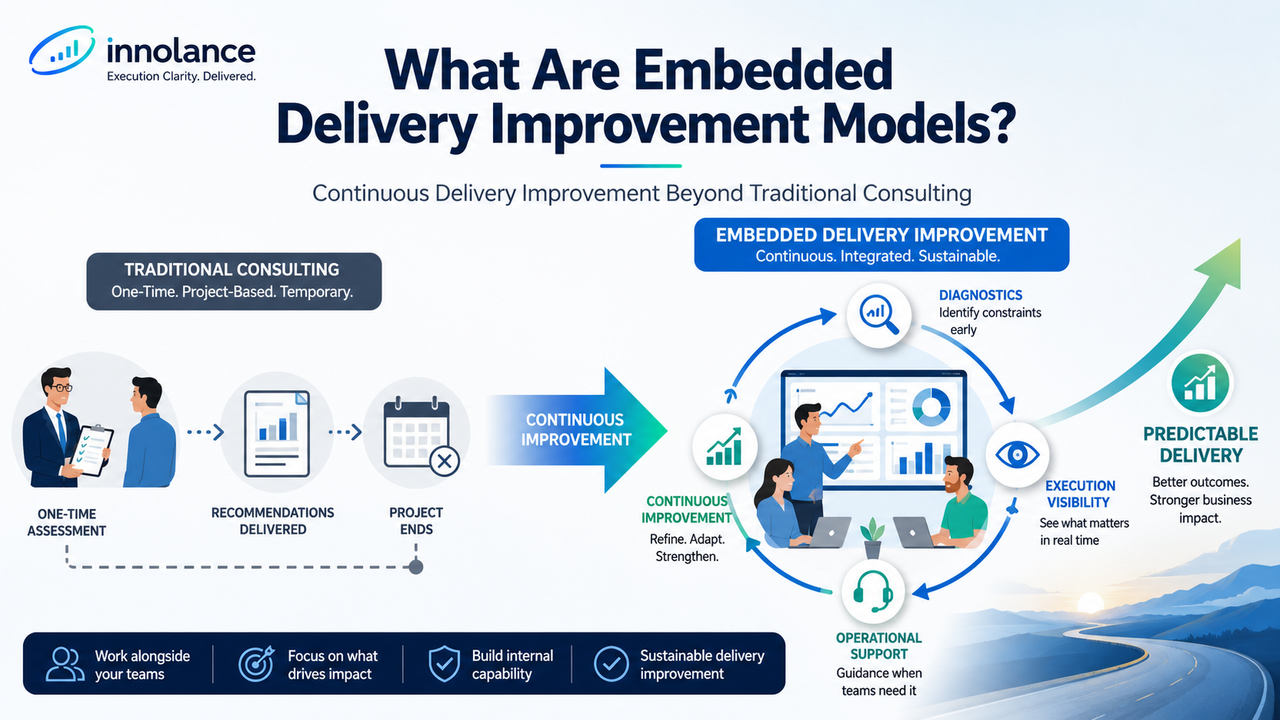
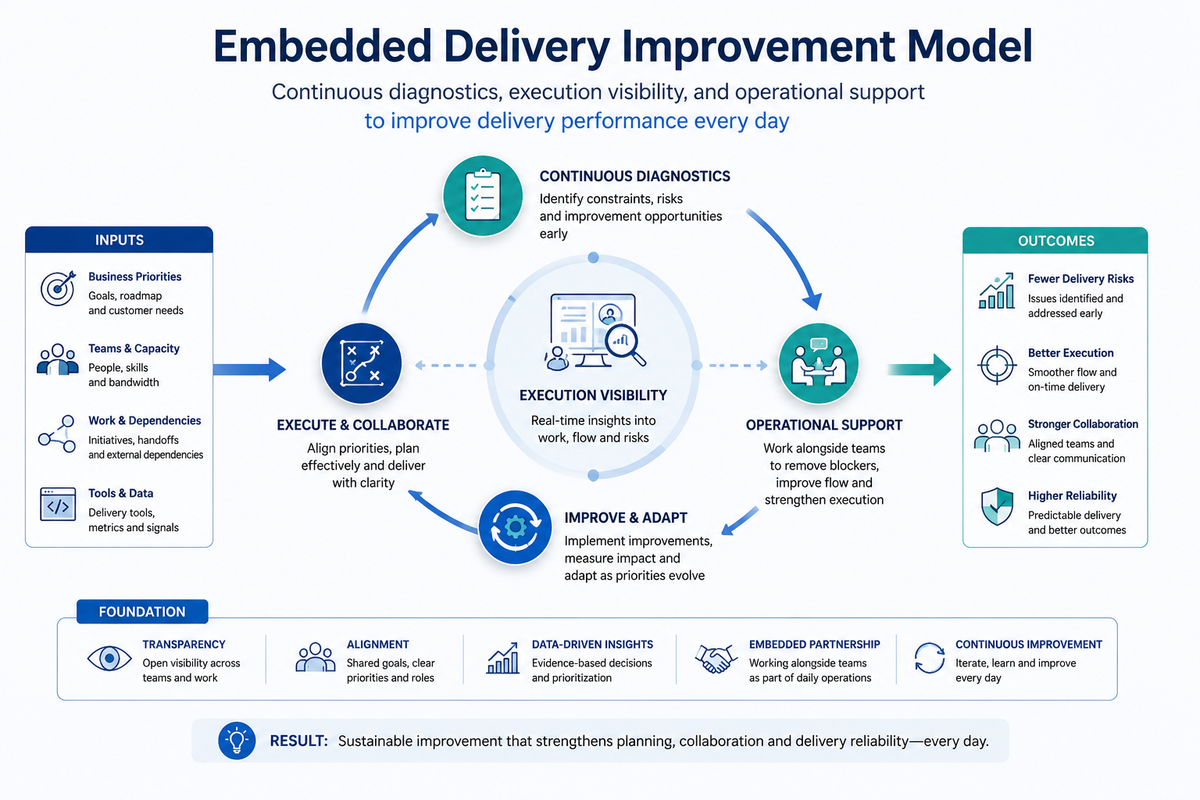
Embedded delivery improvement models are an alternative consulting method that combines continuous diagnostics, operational support, and execution visibility to improve software delivery over time. Unlike traditional consulting engagements that typically conclude after recommendations are delivered, embedded models work alongside internal teams to continuously identify execution constraints, improve planning, and strengthen delivery performance.
For SaaS operations and engineering leaders, this approach creates an ongoing improvement process that evolves with the organization. As priorities change, teams expand, and delivery complexity increases, embedded delivery improvement provides continuous insight into execution health rather than periodic assessments.
Why Are Organizations Looking Beyond Traditional Consulting?
Traditional consulting has helped organizations solve operational challenges for decades. These engagements often deliver strategic recommendations, process improvements, or transformation roadmaps within a fixed timeframe. While valuable, they usually conclude once the engagement ends, leaving organizations responsible for sustaining improvements as business conditions continue to evolve.
Software delivery rarely remains static. New customer demands, shifting priorities, organizational growth, and increasing technical dependencies introduce new execution challenges throughout the software development lifecycle. As a result, many organizations are exploring traditional consulting alternatives that provide continuous operational guidance instead of isolated improvement initiatives.
Key Takeaway: Sustainable delivery improvement requires continuous operational support rather than one-time recommendations.
How Do Embedded Delivery Improvement Models Improve Execution?
Embedded delivery improvement focuses on understanding how work moves across planning, execution, collaboration, and release management. Instead of measuring only completed work, organizations continuously evaluate the operational conditions influencing delivery performance.
Regular diagnostics help leaders identify planning gaps, dependency risks, communication challenges, decision delays, and delivery bottlenecks before they affect customer commitments. This ongoing visibility enables teams to make informed adjustments throughout execution instead of reacting when delivery schedules begin to slip.
Because improvement becomes part of everyday operations, organizations gradually strengthen planning accuracy, cross-functional collaboration, and delivery reliability without introducing unnecessary complexity.
Key Takeaway: Continuous diagnostics enable organizations to resolve execution constraints before they become delivery risks.
Why Is Continuous Visibility More Valuable Than Periodic Assessments?
Periodic assessments provide valuable insights, but software delivery conditions change continuously. New initiatives, technical complexity, staffing changes, and business priorities can quickly alter delivery performance after an assessment has been completed.
Continuous execution visibility allows leaders to understand where work is slowing, why constraints are emerging, and which improvements will have the greatest impact. Rather than relying solely on retrospective reporting, organizations gain ongoing insight into execution health that supports faster decision-making, stronger cross-functional alignment, and more predictable software delivery.
Key Takeaway: Continuous execution visibility enables proactive decisions that improve delivery reliability before risks affect business outcomes.
How Can Organizations Build Sustainable Delivery Improvement?
Long-term delivery improvement depends on continuously identifying and addressing the organizational factors that influence execution. Rather than introducing additional delivery frameworks or repeatedly engaging in isolated consulting projects, organizations benefit from adopting an embedded improvement model that evolves alongside the business.
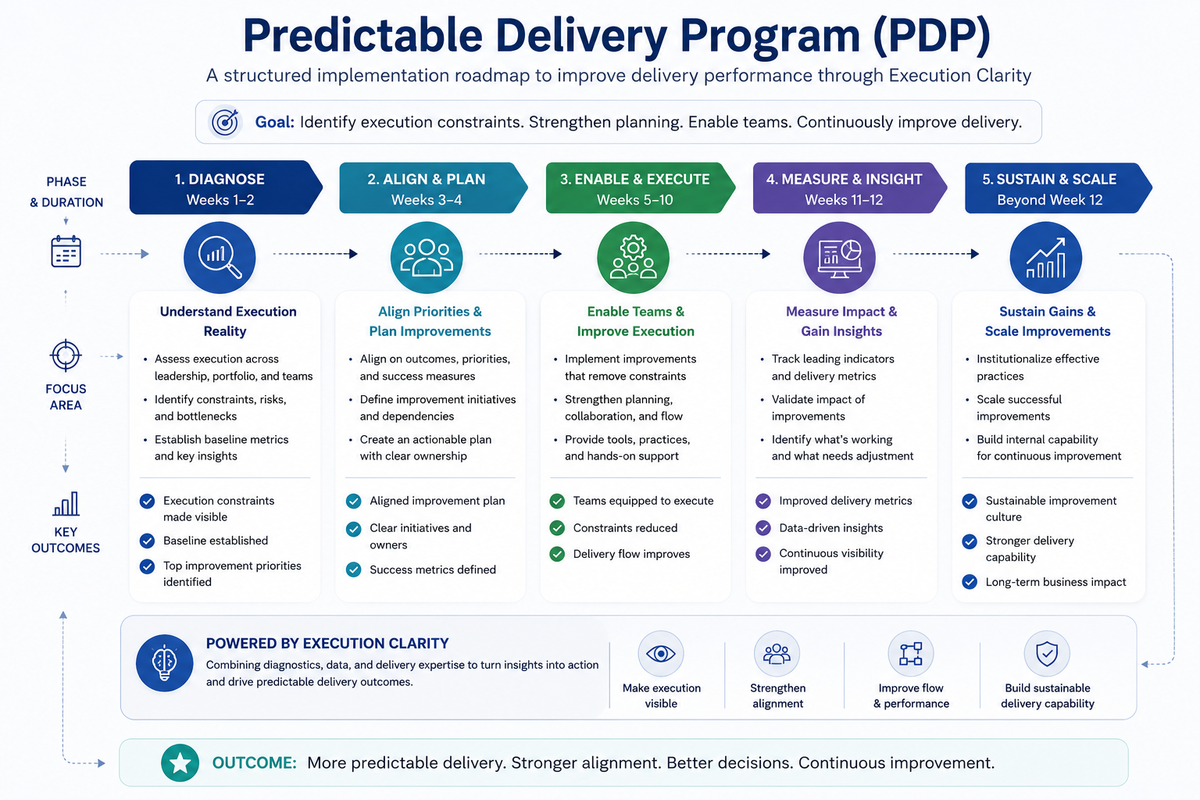
At Innolance, Execution Clarity helps organizations understand where execution is breaking down, identify the underlying delivery constraints, and prioritize practical improvements that strengthen planning, collaboration, and delivery predictability. Through the Predictable Delivery Program (PDP), organizations receive structured guidance that supports continuous operational improvement while enabling internal teams to build lasting delivery capability.
Practical Tip: Before introducing additional delivery frameworks or engaging in another consulting initiative, evaluate whether continuous diagnostics and execution visibility could deliver more sustainable improvements.
Conclusion
Embedded delivery improvement models represent an evolution in how organizations improve software delivery. Rather than treating operational improvement as a one-time consulting engagement, they establish an ongoing process of understanding execution, identifying constraints, and continuously strengthening delivery performance.
For SaaS operations and engineering leaders, this approach creates stronger planning, better collaboration, and more predictable software delivery by making continuous improvement part of everyday execution. Organizations that combine continuous diagnostics with execution visibility are better positioned to respond to changing business needs while building long-term delivery capability and operational excellence.