
Understanding Software Delivery Reliability: Why Software Delivery Becomes Unpredictable in 2026
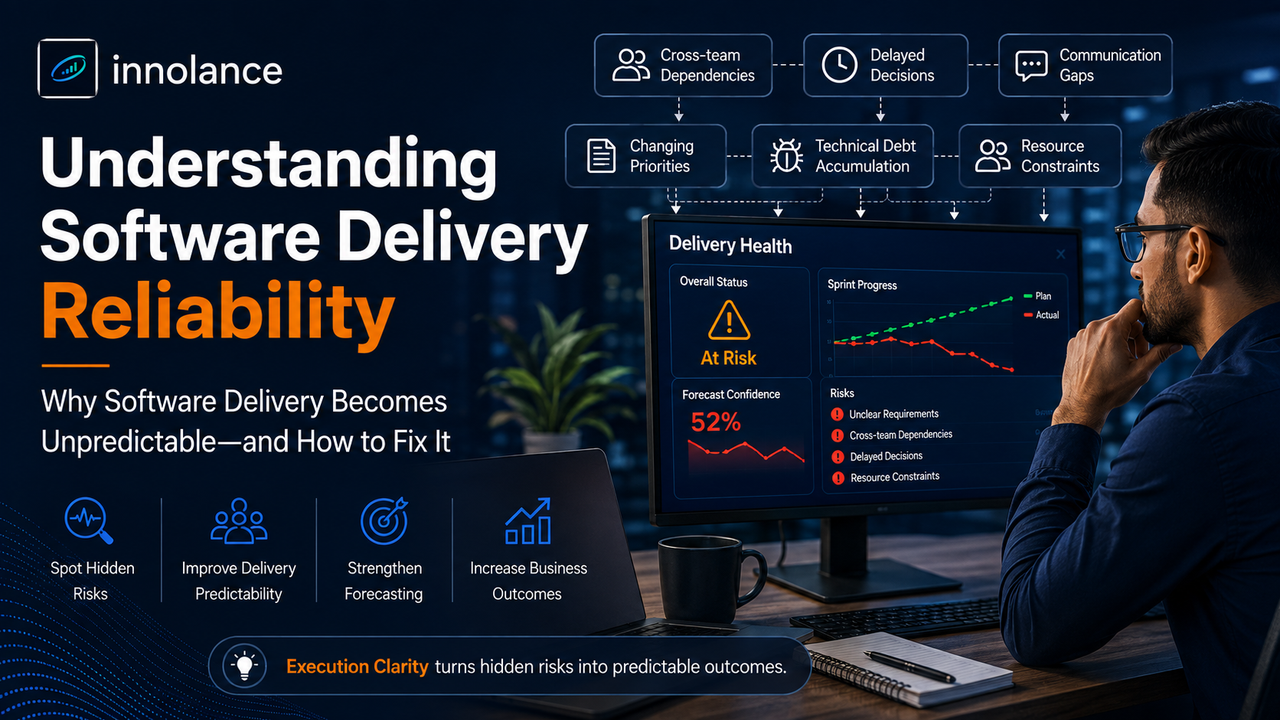
Discover why software delivery becomes unpredictable even when projects appear on track, and learn how engineering leaders can identify hidden execution risks to improve delivery reliability and forecasting accuracy.
Understanding Software Delivery Reliability: Why Software Delivery Becomes Unpredictable in 2026
Executive Summary
Software delivery reliability enables organizations to deliver products consistently, forecast releases with confidence, and meet customer expectations. However, many engineering teams experience unpredictable software delivery even when project dashboards indicate everything is progressing as planned.
The challenge often lies beneath the surface. Hidden execution risks such as changing priorities, delayed decisions, cross-team dependencies, and communication gaps gradually reduce delivery confidence before schedules begin to slip. By recognizing these operational signals early, engineering leaders can improve delivery forecasting, strengthen execution, and build more predictable software development processes.
Why Does Software Delivery Become Less Reliable?
As SaaS organizations grow, software delivery naturally becomes more complex. Additional product teams, evolving customer requirements, shared platforms, and changing business priorities increase the number of factors influencing successful delivery.
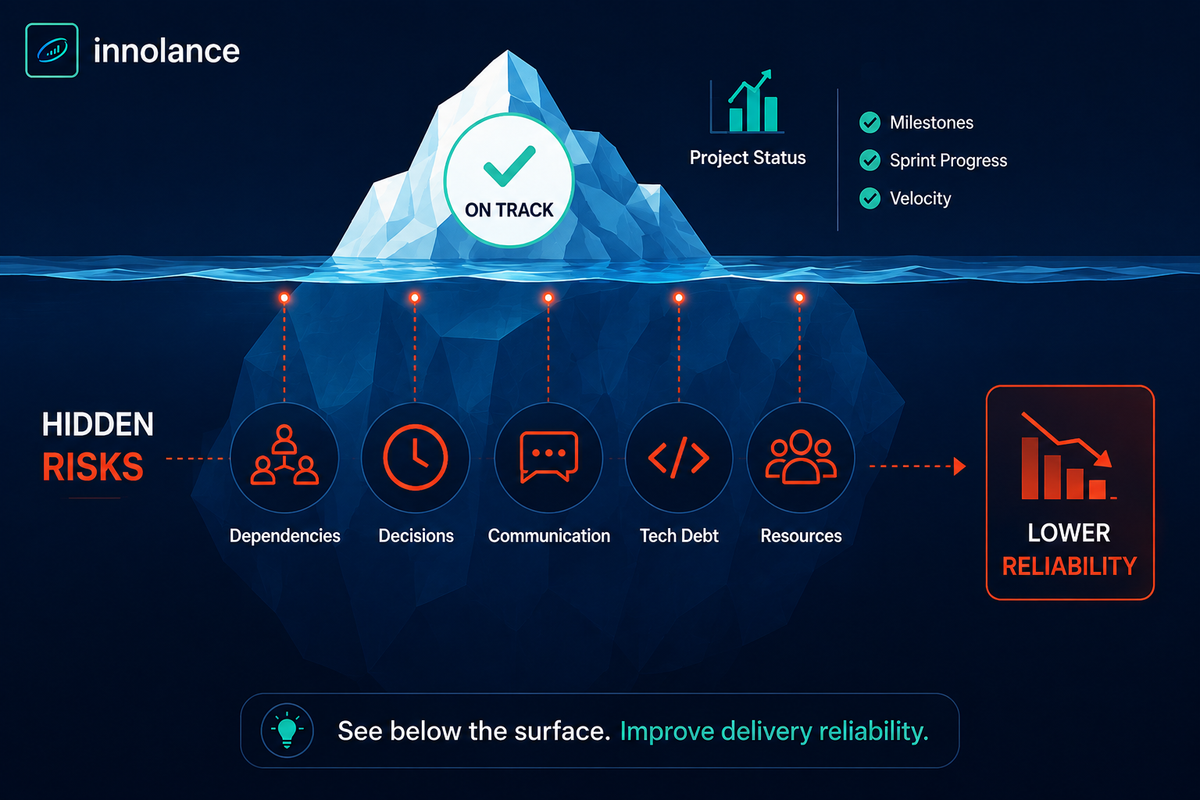
Although sprint reports and milestone tracking may indicate that projects remain on schedule, hidden execution challenges often develop beneath the surface. Delayed decisions, communication breakdowns, resource constraints, growing technical debt, and unmanaged dependencies gradually reduce delivery reliability long before deadlines are missed.
Traditional reporting typically measures completed work rather than the operational conditions affecting future delivery success. As a result, leadership often discovers problems only after delivery commitments begin to slip.
Understanding these hidden risks is the first step toward improving software delivery reliability.
Which Operational Signals Indicate Delivery Risks?
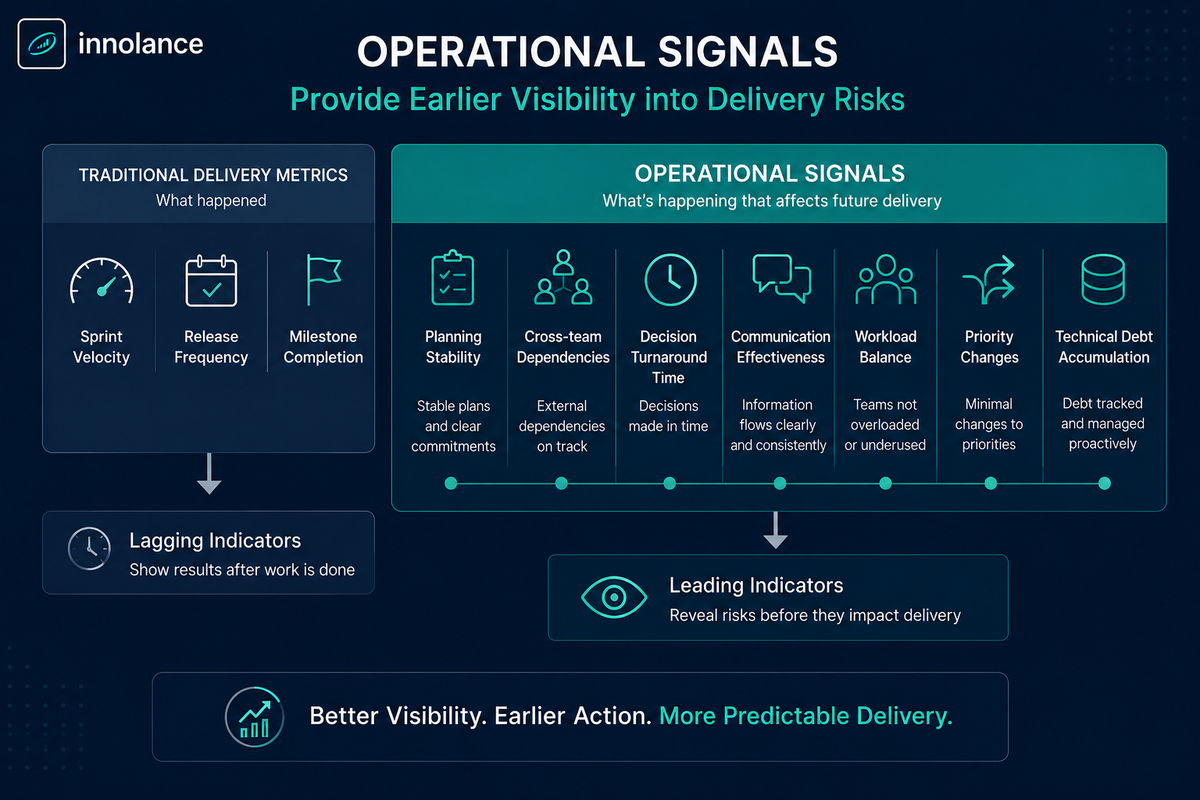
Many organizations monitor sprint velocity, release frequency, and milestone completion to measure delivery performance. While these metrics provide valuable historical insight, they rarely explain why future commitments become increasingly difficult to achieve.
Engineering leaders should also monitor operational indicators that influence execution quality, including:
- Planning stability
- Cross-team dependencies
- Decision turnaround time
- Communication effectiveness
- Workload balance
- Priority changes
- Technical debt accumulation
These indicators provide earlier visibility into project management risks that may eventually affect delivery performance. When organizations identify these warning signs before schedules begin to slip, they can respond proactively rather than reactively.
Monitoring execution health alongside delivery metrics significantly improves forecasting confidence and reduces unexpected delivery disruptions.
How Can Engineering Leaders Improve Delivery Forecasting?
Reliable delivery forecasting depends on understanding both delivery progress and execution health throughout the software development lifecycle.
Rather than relying exclusively on historical reporting, organizations should continuously evaluate the operational factors affecting delivery performance.
Engineering leaders can strengthen forecasting by:
Improve Planning Stability
Maintain clear priorities and ensure delivery commitments align with available team capacity.
Increase Execution Visibility
Identify delivery bottlenecks before they impact roadmap commitments or customer expectations.
Manage Dependencies Proactively
Improve coordination between engineering, product, and business teams to reduce delays caused by cross-functional dependencies.
Monitor Leading Indicators
Combine traditional project metrics with operational health indicators to improve forecast accuracy and delivery confidence.
Organizations that continuously assess execution quality can make more informed decisions, reduce uncertainty, and improve overall software delivery performance.
How Does Execution Clarity Improve Software Delivery Reliability?
Collecting delivery metrics alone does not guarantee better decisions. Organizations also need visibility into the operational factors influencing execution.
This is where Execution Clarity becomes essential.
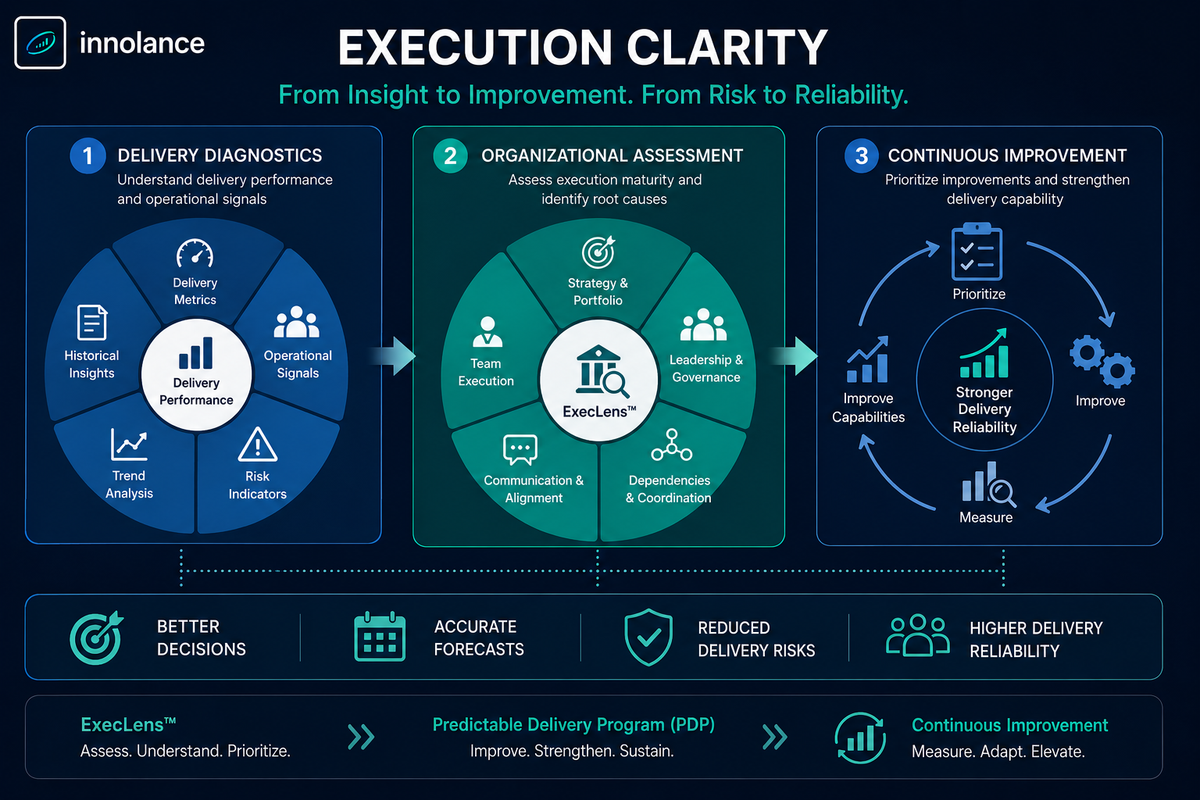
Execution Clarity enables engineering leaders to understand how leadership decisions, portfolio planning, communication, dependencies, and team execution interact throughout the software development process. Rather than viewing delivery performance through isolated metrics, organizations gain a comprehensive understanding of why delivery reliability is improving—or declining.
At Innolance, organizations use ExecLens™ to assess execution maturity, identify organizational constraints, and uncover delivery risks that traditional reporting often overlooks. The assessment creates awareness, validates operational challenges, and helps leadership prioritize meaningful improvements. These insights can then support a structured improvement journey through the Predictable Delivery Program (PDP), enabling organizations to strengthen delivery capability through continuous measurement and operational improvement.
Practical Tip
Alongside sprint velocity and milestone tracking, regularly review planning stability, dependency management, communication effectiveness, decision speed, and workload balance. Monitoring both delivery outcomes and execution health provides a more accurate view of software delivery reliability and enables earlier intervention when risks emerge.
Conclusion
Software delivery reliability rarely declines because of a single missed deadline. More often, it weakens gradually as hidden execution risks accumulate across planning, collaboration, dependencies, and decision-making.
Organizations that improve execution visibility, monitor operational indicators, and continuously evaluate delivery health can identify risks earlier, improve delivery forecasting, and strengthen predictability in engineering. With greater Execution Clarity, leaders can make better decisions, reduce delivery uncertainty, and build software development processes that consistently support long-term business success.