
The CRM Adoption Playbook: How to Increase CRM Adoption and Improve Sales Execution in 2026

Learn why CRM adoption fails and discover a practical playbook to improve user adoption, strengthen sales execution, and turn CRM data into measurable business outcomes.
The CRM Adoption Playbook: How to Increase CRM Adoption and Improve Sales Execution in 2026
Executive Summary
Many organizations invest in customer relationship management (CRM) platforms expecting better visibility, improved forecasting, and stronger sales performance. However, technology alone does not create value. A CRM only delivers measurable business outcomes when sales teams consistently use it as part of their daily workflow.
This guide explains why CRM adoption often fails, the common barriers preventing teams from embracing the system, and practical strategies that improve user adoption, strengthen sales execution, and transform CRM data into actionable business insights.
Direct Answer
Improving CRM adoption requires more than training employees or introducing new technology. Organizations achieve lasting adoption when the CRM supports existing workflows, removes unnecessary administrative effort, provides visible value to users, and enables better sales execution. By focusing on usability, automation, and continuous improvement, leaders can increase adoption while improving data quality and business decision-making.
Why Do CRM Adoption Initiatives Fail?
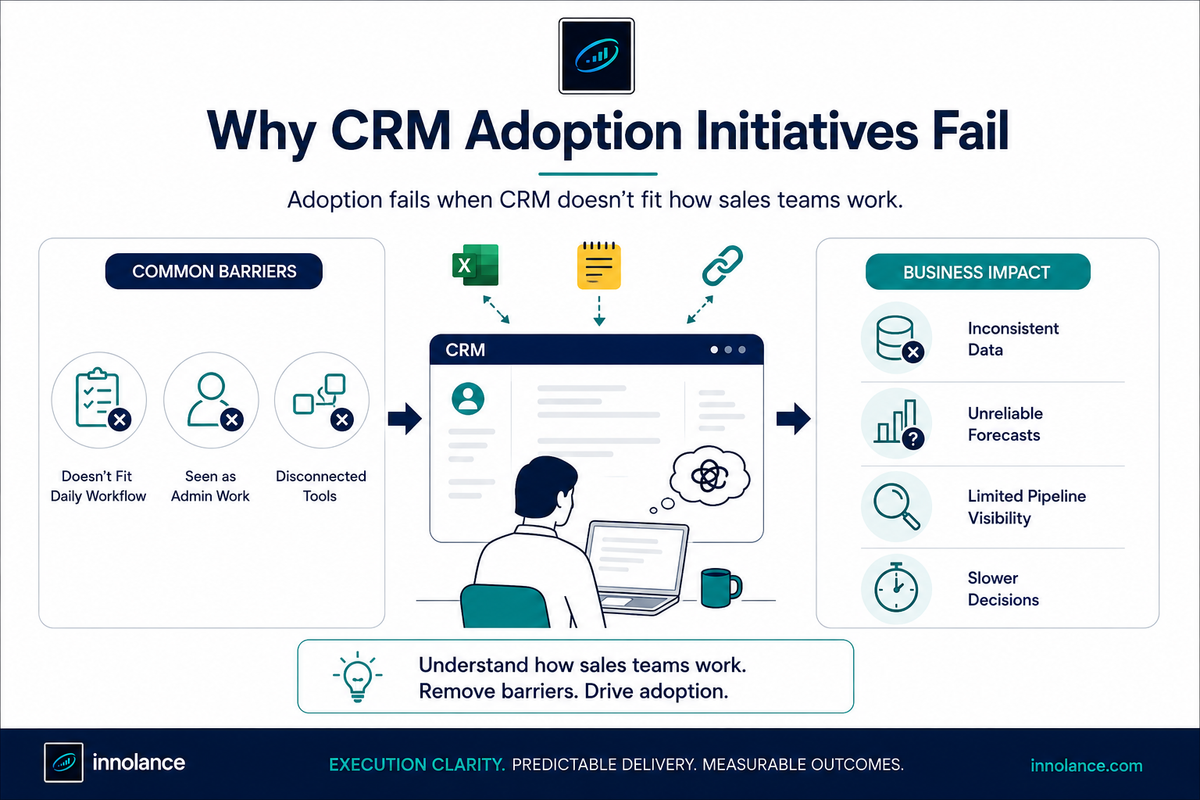
Many CRM implementation projects begin with high expectations but gradually lose momentum. While the platform may be technically successful, daily adoption often remains low because the system does not fit naturally into how sales teams work.
Sales representatives frequently return to spreadsheets, personal notes, or disconnected tools because they view CRM updates as additional administrative work rather than something that helps them close deals.
When adoption declines, organizations face broader operational challenges, including inconsistent customer data, unreliable forecasts, limited pipeline visibility, and slower decision-making.
Understanding these challenges is the first step toward building a CRM strategy that supports both users and the business.
How Can Organizations Build CRM Around Real Workflows?
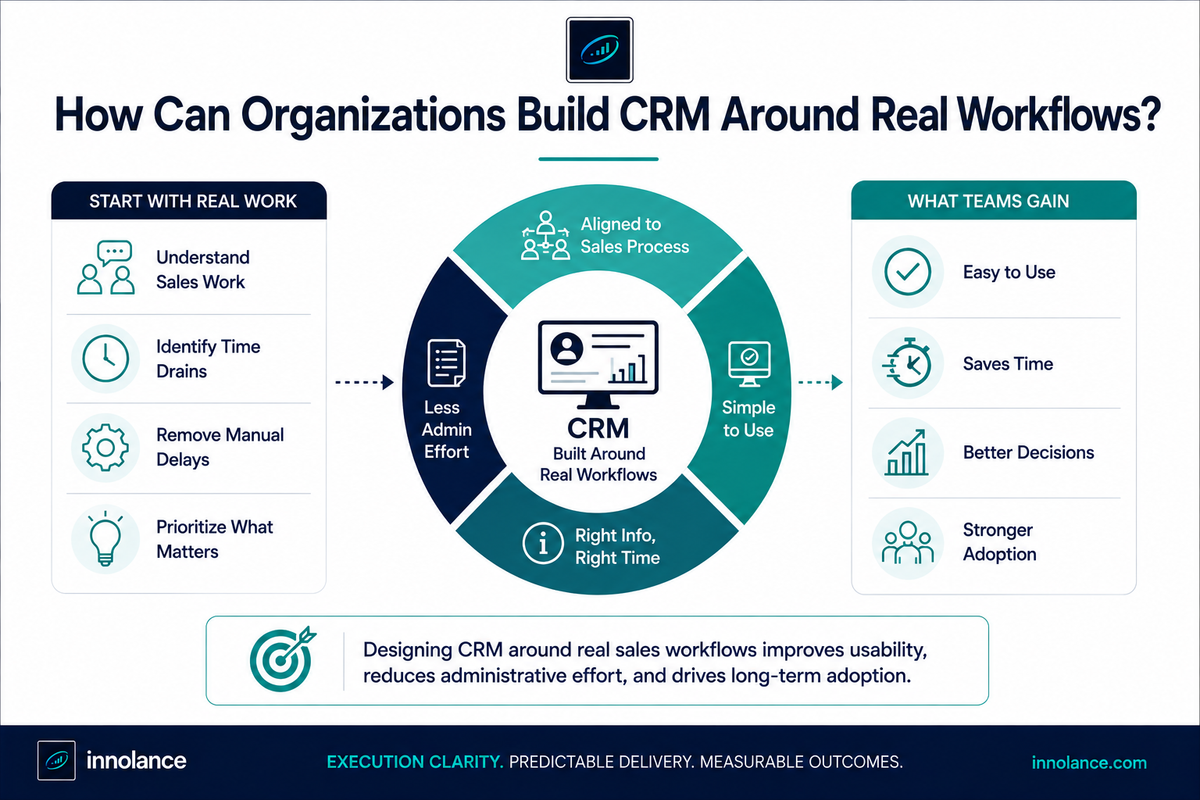
One of the most effective ways to improve CRM user adoption is to design the system around existing sales processes rather than expecting employees to change their daily habits.
Before configuring fields, dashboards, or automation, organizations should evaluate how work actually flows across sales teams.
Key questions include:
- How do sales representatives manage customer interactions?
- Which activities consume the most administrative time?
- Where do manual processes create unnecessary delays?
- Which information helps sales teams make faster decisions?
When CRM supports daily workflows instead of interrupting them, users experience immediate value, making adoption significantly more sustainable.
Organizations should also simplify the user experience by reducing unnecessary data entry, standardizing processes, and ensuring that important information is available when it is needed.
What Practical Steps Improve CRM Adoption?
Successful CRM adoption depends on removing friction while demonstrating measurable business value.
Organizations can strengthen adoption by focusing on several practical improvements:
Simplify Data Entry
Collect only the information necessary for reporting and decision-making. Reducing unnecessary fields encourages consistent usage and improves data quality.
Automate Repetitive Tasks
Automatically populate information whenever possible. Integrating CRM with email, calendars, and other business systems reduces manual effort and saves valuable selling time.
Deliver Value to Users
Sales representatives should experience immediate benefits, including improved opportunity visibility, faster approvals, easier follow-ups, and more accurate forecasting. When CRM supports daily success, adoption becomes a habit rather than a management requirement.
Measure Adoption Continuously
Organizations should regularly review adoption rates, data completeness, workflow efficiency, and user feedback to identify improvement opportunities before adoption begins to decline.
How Does Better CRM Adoption Improve Sales Execution?
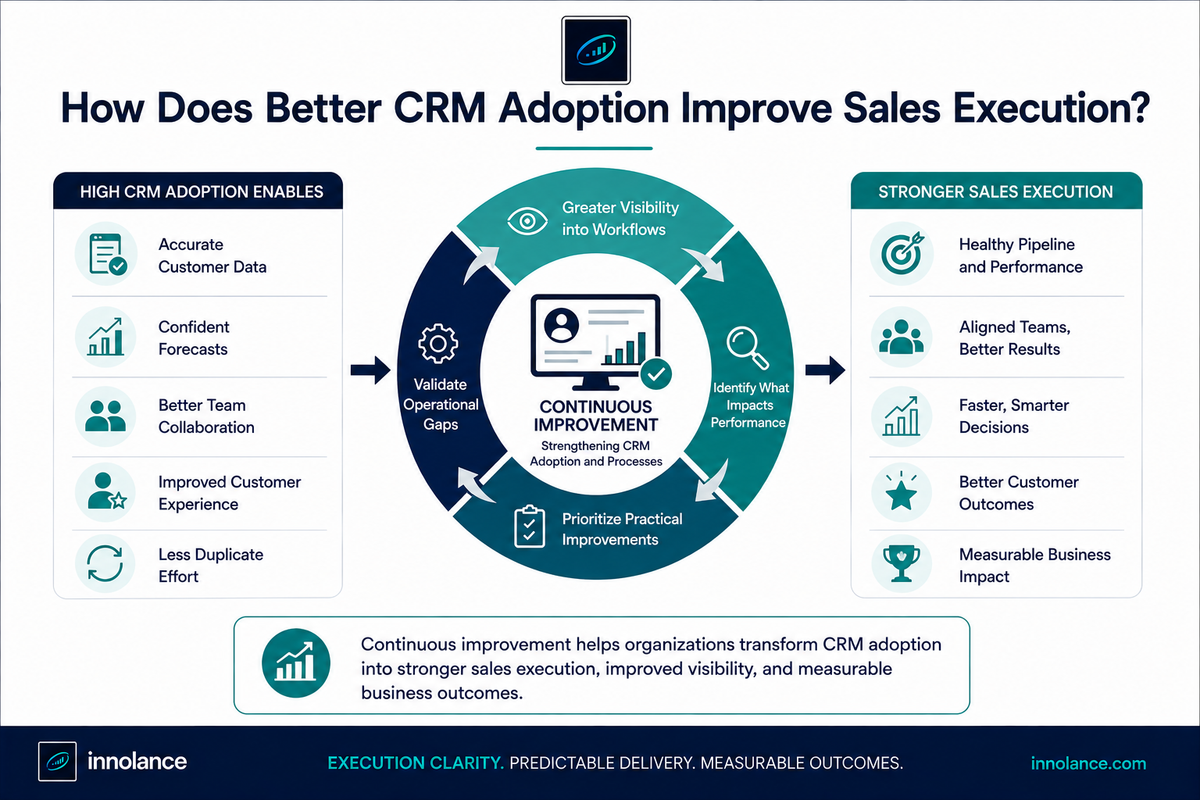
High CRM adoption creates benefits that extend far beyond system usage.
When customer information is accurate, leaders gain greater confidence in forecasts, pipeline health, and sales performance. Teams collaborate more effectively because everyone works from the same information, reducing duplicate effort and improving customer experiences.
At Innolance, organizations improve execution by helping leaders gain greater visibility into operational workflows and identify the factors affecting business performance. Rather than simply implementing technology, organizations benefit from understanding where adoption challenges exist, validating operational gaps, and prioritizing practical improvements that strengthen execution over time.
By continuously improving processes and supporting user adoption, CRM becomes a strategic business platform rather than a reporting tool.
Practical Tip
Before introducing additional CRM features, ask your sales teams one simple question: "What slows you down every day?" Addressing the most common workflow challenges often improves CRM adoption more effectively than adding new functionality or additional training sessions.
Conclusion
CRM success is not determined by implementation alone. It depends on how consistently people use the system to support everyday sales activities.
Organizations that design CRM around real workflows, reduce unnecessary complexity, automate repetitive tasks, and continuously improve the user experience create higher adoption and better business outcomes. Instead of treating CRM as another reporting requirement, they transform it into a platform that strengthens sales execution, improves decision-making, and delivers long-term value across the organization.