
How to Measure Software Delivery Risk in 2026
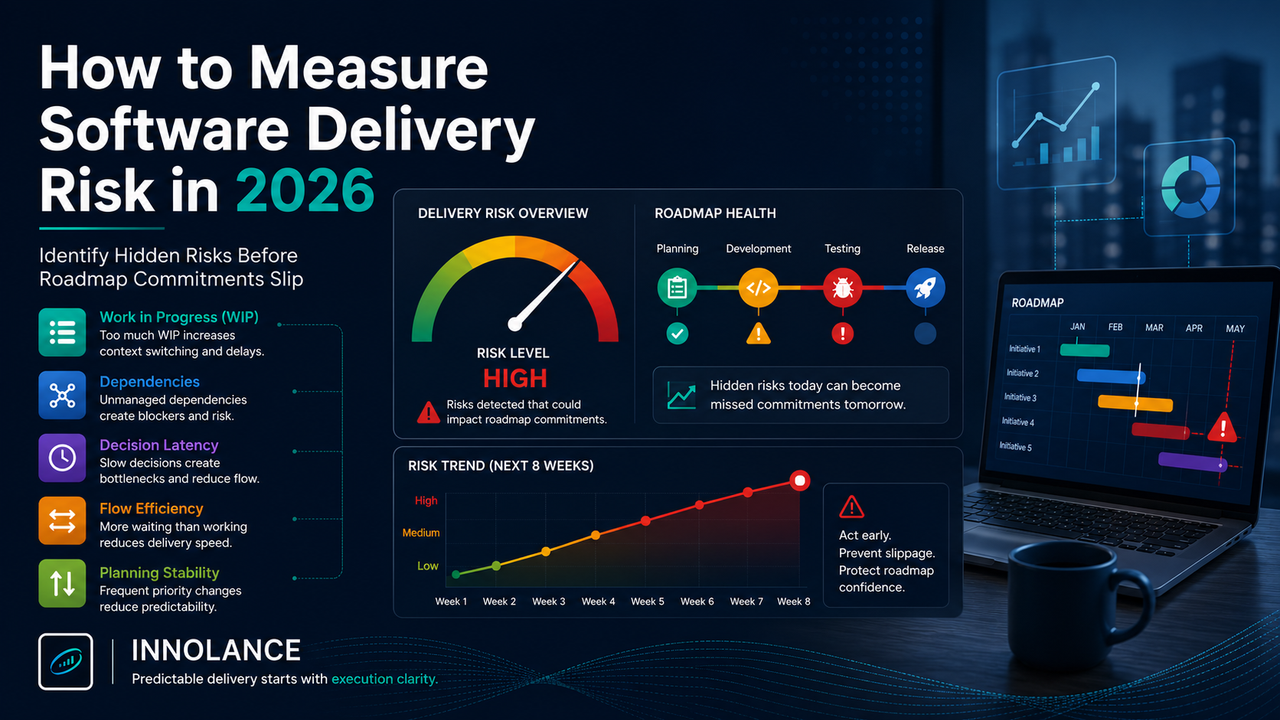
Learn how to measure software delivery risk using leading indicators that reveal hidden execution issues before roadmap commitments slip, helping leaders improve software delivery predictability and delivery confidence.
How to Measure Software Delivery Risk in 2026
Executive Summary
Software delivery rarely fails because of a single missed deadline. More often, delivery becomes unpredictable because hidden risks such as growing dependencies, delayed decisions, and shifting priorities remain invisible until roadmap commitments begin to slip. By measuring leading indicators instead of relying solely on historical metrics, leaders can identify risks earlier, improve execution visibility, and build more predictable software delivery.
Direct Answer
Software delivery risk should be measured using leading indicators that reveal the health of execution before deadlines are missed. Metrics such as Work in Progress (WIP), dependencies, decision latency, flow efficiency, and planning stability provide early warning signals that help leaders improve software delivery predictability and reduce delivery risk.
Why do traditional project metrics fail to predict delivery risk?
Many organizations evaluate delivery using sprint velocity, story points, release frequency, or defect counts. While these metrics explain what has already happened, they provide little insight into whether future roadmap commitments remain achievable.
The more important question is not, "Are we on schedule today?" but "Will we still be on schedule four weeks from now?"
Projects can appear healthy while architecture decisions are delayed, dependencies accumulate, and business priorities continue to change. Without visibility into these conditions, delivery risks remain hidden until milestones begin to slip.
What leading indicators reveal software delivery risk?
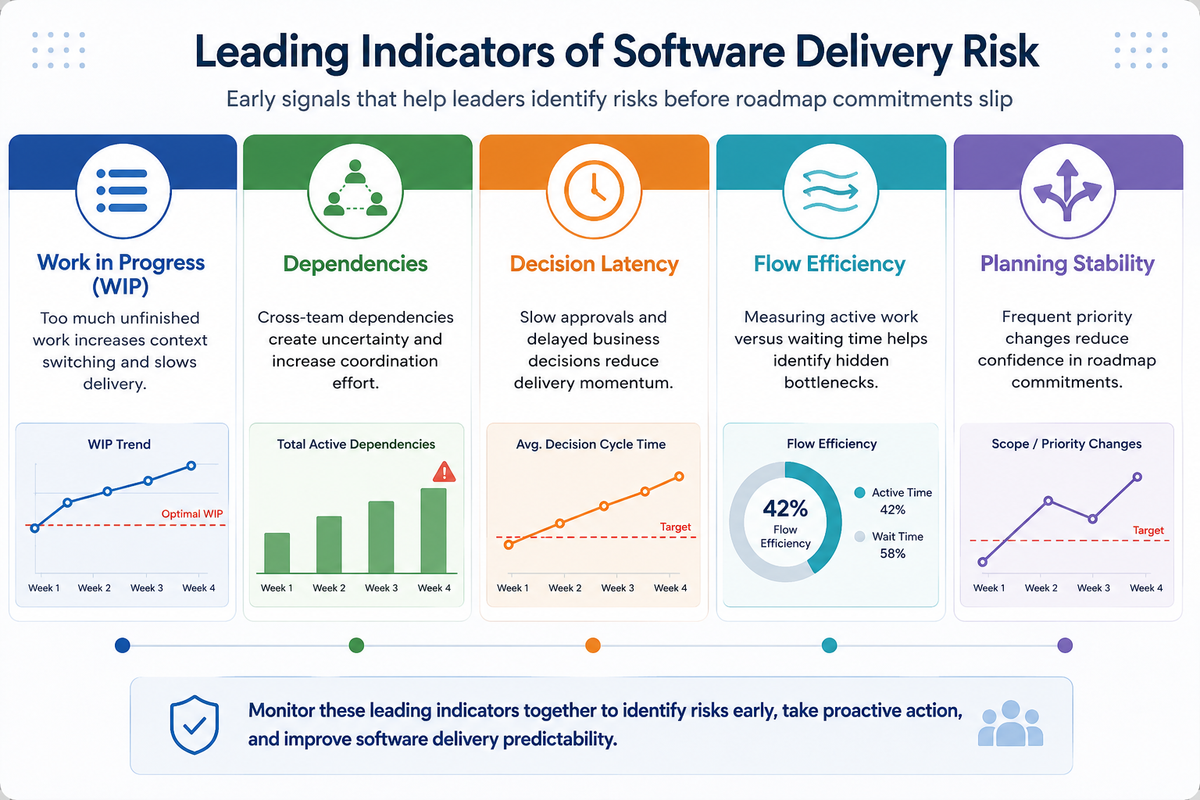
Organizations that consistently improve delivery reliability focus on leading indicators that expose emerging risks before they become missed commitments.
The most valuable indicators include:
- Work in Progress (WIP): Too much unfinished work increases context switching and slows delivery.
- Dependencies: Cross-team dependencies create uncertainty and increase coordination effort.
- Decision Latency: Slow approvals and delayed business decisions reduce delivery momentum.
- Flow Efficiency: Measuring active work versus waiting time helps identify hidden bottlenecks.
- Planning Stability: Frequent priority changes reduce confidence in roadmap commitments.
Viewed together, these indicators provide a far clearer picture of delivery health than traditional project reporting alone.
How can leaders identify delivery risks before roadmap commitments slip?
Rather than reviewing project status alone, leaders should regularly evaluate the conditions influencing execution.
A practical delivery risk assessment includes questions such as:
- Is unfinished work steadily increasing?
- Which dependencies currently have no clear owner?
- How long do critical decisions remain unresolved?
- Where is work spending the most time waiting?
- Have priorities changed more than once during the current delivery cycle?
If these questions are difficult to answer, the organization may have an execution visibility problem rather than a delivery problem. Identifying these risks early allows leaders to make proactive decisions before delivery confidence begins to decline.
How does Execution Clarity improve software delivery predictability?
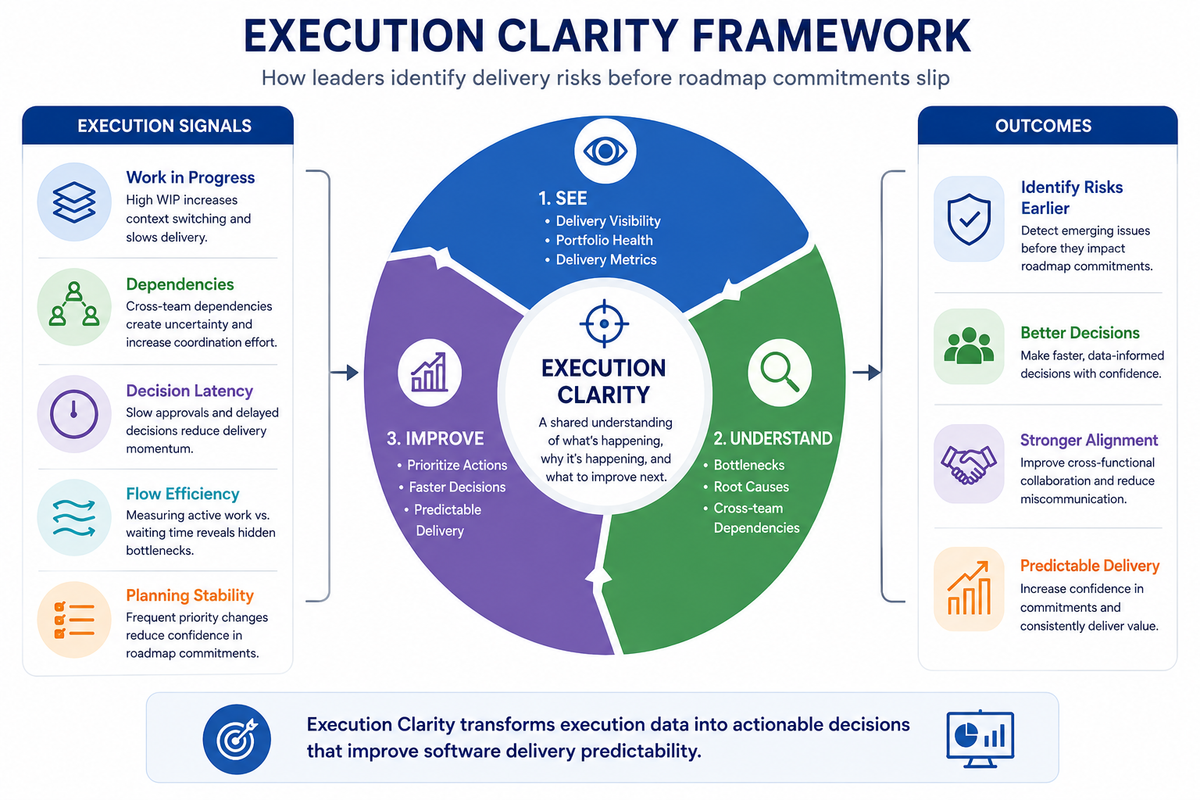
Execution Clarity is the ability to understand where execution is slowing down, why it is happening, and what should improve next. It provides leaders with a shared view across strategy, planning, delivery, and operations, enabling better decisions before roadmap commitments are affected.
Instead of reacting after milestones are missed, leaders gain visibility into emerging risks, strengthen cross-functional alignment, and focus improvement efforts where they deliver the greatest impact.
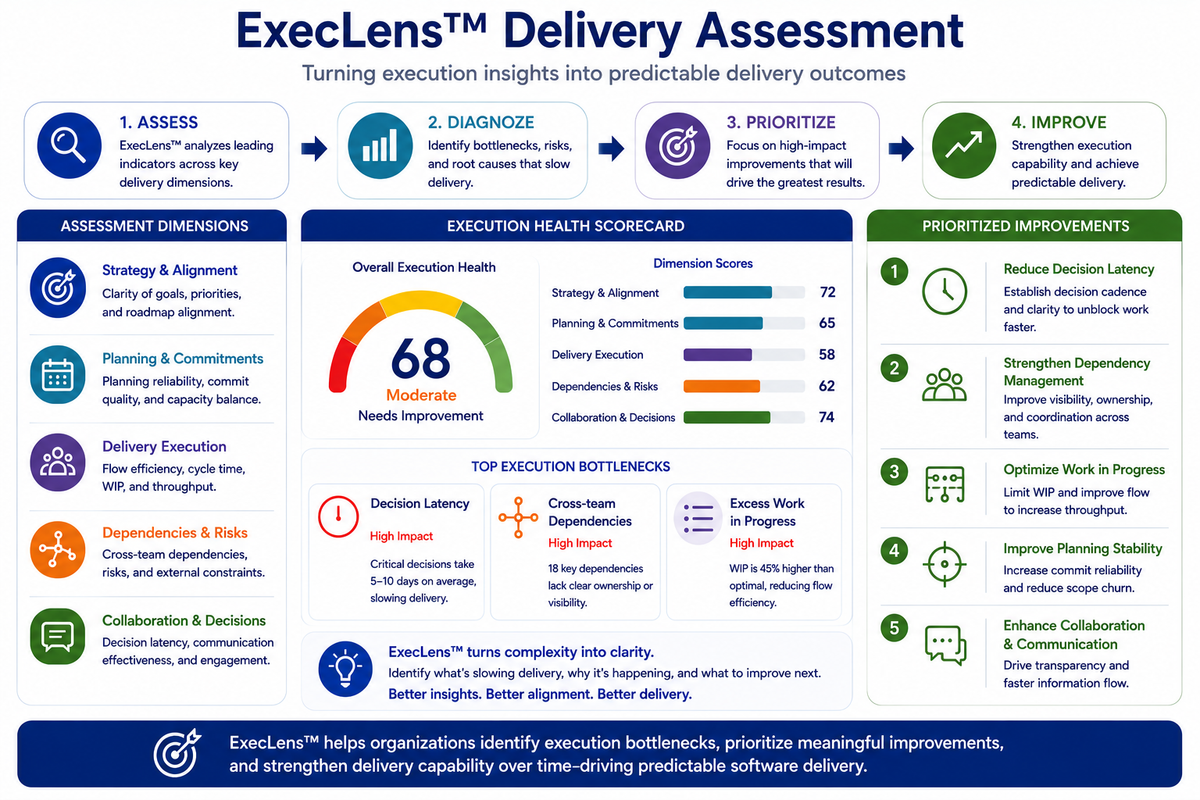
Using insights generated through ExecLens™, organizations can identify execution bottlenecks, prioritize meaningful improvements, and strengthen delivery capability over time.
What should leaders do next?
Predictable delivery begins long before a release date. Organizations that consistently meet roadmap commitments measure leading indicators, improve execution visibility, and act on emerging risks before they become delivery problems.
Rather than asking why delivery slipped after the fact, leaders should focus on understanding the conditions influencing execution every day. Combining leading indicators with Execution Clarity enables organizations to reduce delivery risk, improve decision-making, and increase confidence in future commitments.
Conclusion
Software delivery predictability is not about eliminating uncertainty. Every organization faces changing priorities, evolving customer expectations, and unexpected technical challenges. The difference lies in how early those challenges become visible.
Organizations that consistently deliver against their roadmap commitments focus on measuring leading indicators instead of relying solely on historical performance metrics. By improving visibility into execution, leaders can identify emerging risks sooner, make better-informed decisions, and strengthen confidence in delivery outcomes.
Execution Clarity brings together strategy, planning, and delivery insights to help organizations understand what is happening, why it is happening, and what should improve next. For organizations looking to strengthen predictable delivery, Innolance's Execution Clarity framework, ExecLens™ assessment, and Predictable Delivery Programprovide a structured approach to identifying execution risks, improving alignment, and building lasting delivery confidence.