
How to Diagnose Unpredictable Software Delivery in 2026: A Practical Guide to Restoring Delivery Predictability
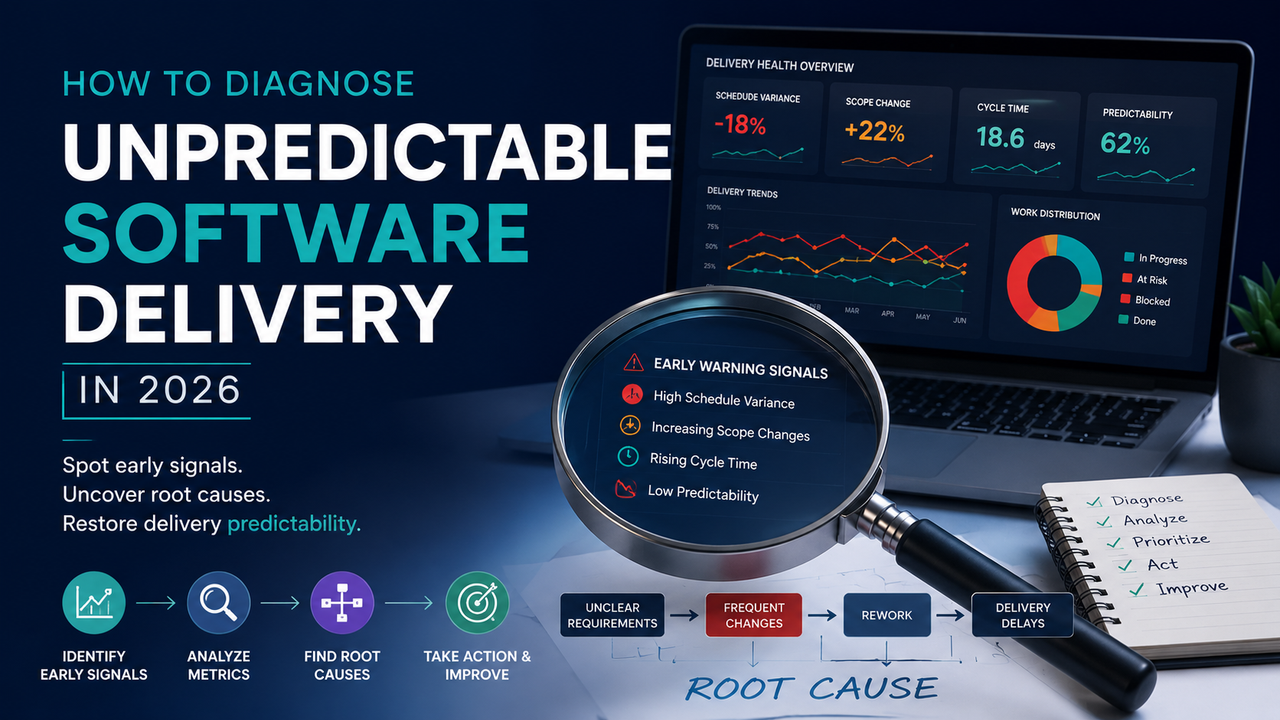
Learn how to diagnose unpredictable software delivery by identifying early warning signals, analyzing delivery metrics, and uncovering root causes before project schedules and roadmap commitments begin to slip.
How to Diagnose Unpredictable Software Delivery in 2026: A Practical Guide to Restoring Delivery Predictability
Executive Summary
Unpredictable software delivery rarely happens overnight. Most delivery problems begin as small planning gaps, hidden dependencies, communication delays, or resource constraints that remain unnoticed until project schedules start slipping. By the time delivery milestones are missed, the underlying issues have often been affecting execution for weeks or even months.
This guide explains how engineering leaders and PMO teams can diagnose unpredictable software delivery by identifying early warning signals, analyzing delivery metrics, and performing structured root cause analysis. With continuous visibility into execution, organizations can address delivery risks earlier and improve long-term delivery predictability.
Direct Answer
Diagnosing unpredictable software delivery requires more than tracking deadlines or completed tasks. Organizations need continuous software delivery diagnostics that reveal how planning, execution, collaboration, and dependencies affect delivery performance. By monitoring leading indicators and conducting root cause analysis, engineering leaders can identify delivery risks before they become schedule delays and improve overall delivery predictability.
Why Does Software Delivery Become Unpredictable?
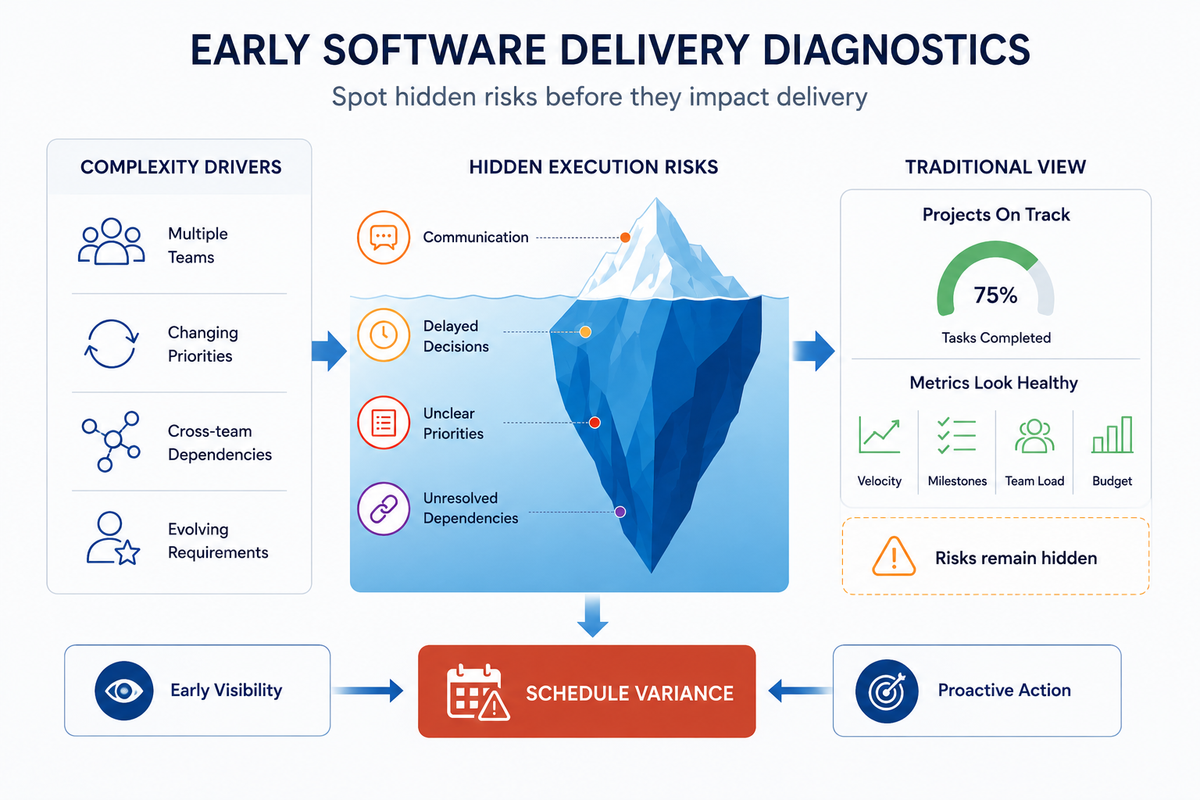
Growing software organizations face increasing delivery complexity. Multiple product teams, changing priorities, cross-functional dependencies, and evolving customer requirements all influence how work progresses.
Traditional project reporting often focuses on completed work, making projects appear healthy even when execution challenges are building beneath the surface. Communication gaps, delayed decisions, unclear priorities, and unresolved dependencies quietly reduce delivery confidence long before schedules begin to slip.
Understanding these hidden operational signals is the first step toward improving delivery performance.
What Early Warning Signals Should Leaders Monitor?
Organizations rarely lose delivery predictability because of a single event. Instead, multiple small indicators gradually combine into larger execution problems.
Common early warning signals include:
- Increasing project schedule variance
- Growing delivery dependencies
- Frequent priority changes
- Delayed leadership decisions
- Rising delivery cycle times
- Declining commitment reliability
- Reduced cross-team collaboration
Monitoring these indicators provides earlier visibility into execution health and enables teams to take corrective action before delivery commitments are affected.
Rather than reacting to missed milestones, leaders can proactively address risks while projects remain recoverable.
How Can Root Cause Analysis Improve Delivery Performance?
Identifying a delivery delay is only the beginning. Sustainable improvement depends on understanding why delivery performance is declining.
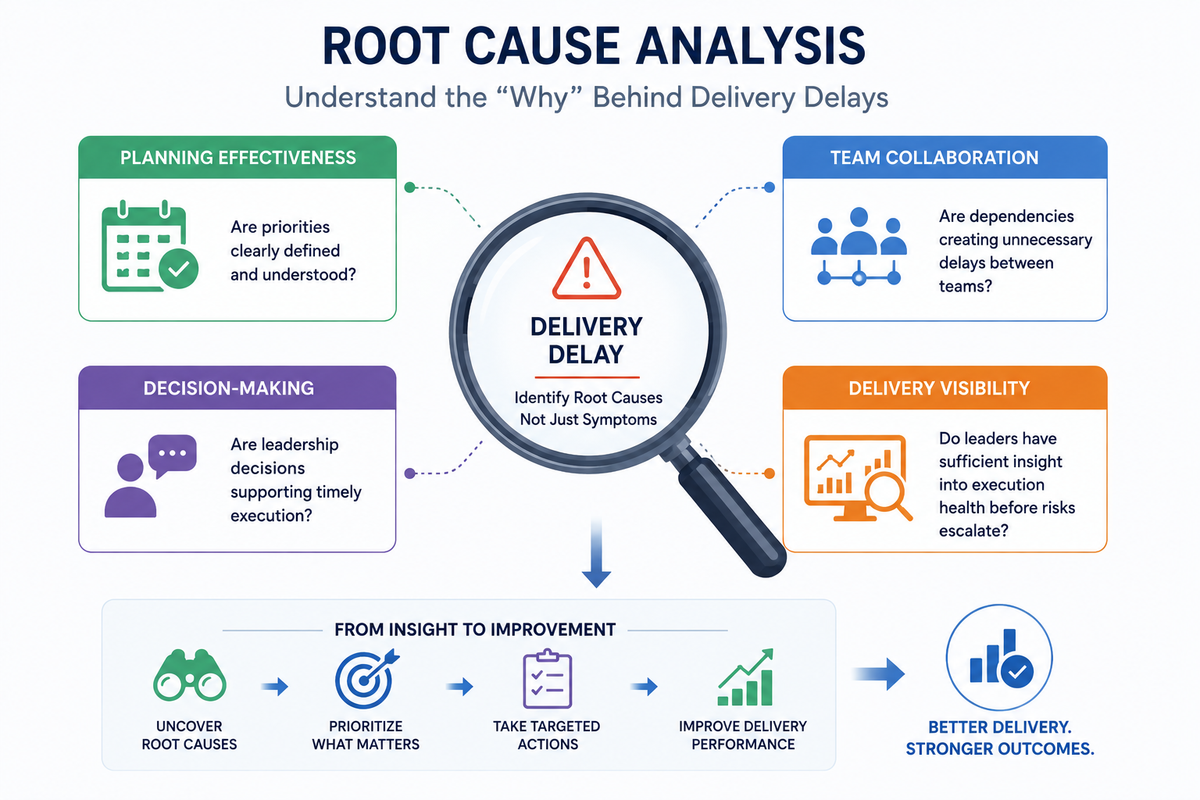
Effective root cause analysis examines operational factors including:
Planning Effectiveness
Are priorities clearly defined and understood?
Team Collaboration
Are dependencies creating unnecessary delays between teams?
Decision-Making
Are leadership decisions supporting timely execution?
Delivery Visibility
Do leaders have sufficient insight into execution health before risks escalate?
Analyzing these areas helps organizations distinguish symptoms from underlying operational challenges and prioritize improvements that deliver lasting results.
How Does Execution Clarity Improve Delivery Predictability?
Many organizations collect delivery metrics but struggle to translate them into meaningful operational decisions. Metrics become significantly more valuable when combined with Execution Clarity.
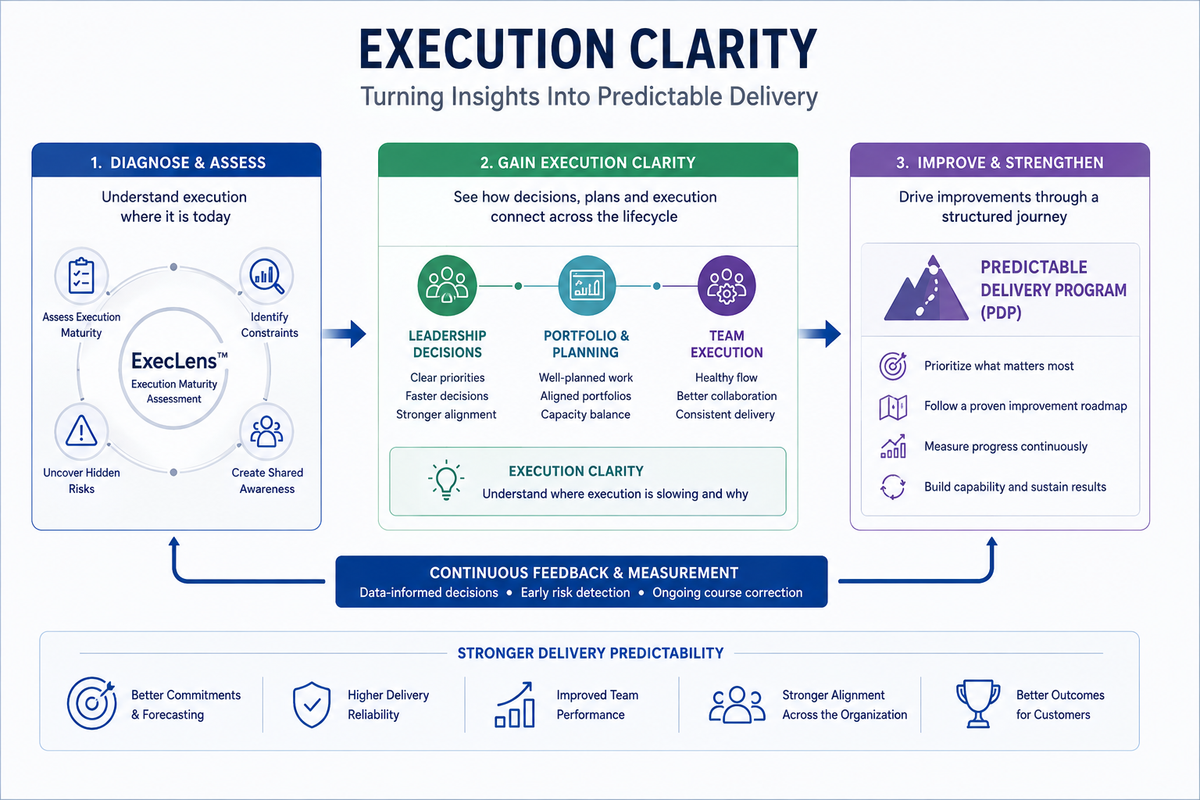
Execution Clarity helps leaders understand how leadership decisions, portfolio planning, and team execution interact throughout the software development lifecycle. Rather than viewing delivery performance through isolated metrics, organizations gain a comprehensive understanding of where execution is slowing and why.
At Innolance, organizations use ExecLens™ to assess execution maturity, identify organizational constraints, and uncover delivery risks that traditional reporting may overlook. The assessment creates awareness, validates delivery challenges, and helps leadership prioritize practical improvements. These insights can then support a structured improvement journey through the Predictable Delivery Program (PDP), enabling organizations to strengthen delivery capability through continuous measurement and operational improvement.
Practical Tip
If delivery appears healthy but projects continue missing commitments, begin by evaluating planning quality, decision-making speed, dependency management, and execution visibility instead of focusing only on completed work. Early diagnostics often reveal risks before schedule variance becomes visible.
Conclusion
As software delivery becomes increasingly complex in 2026, organizations need more than traditional project reporting to maintain predictable execution. Sustainable delivery performance depends on identifying hidden operational risks before they impact customer commitments.
By combining software delivery diagnostics, meaningful delivery metrics, structured root cause analysis, and Execution Clarity, engineering leaders and PMO teams can improve delivery visibility, strengthen decision-making, and restore delivery predictability. Organizations that continuously diagnose execution rather than reacting to missed milestones are better positioned to deliver software reliably while building stronger operational capability for future growth.