
How to Diagnose Delivery Constraints in 2026
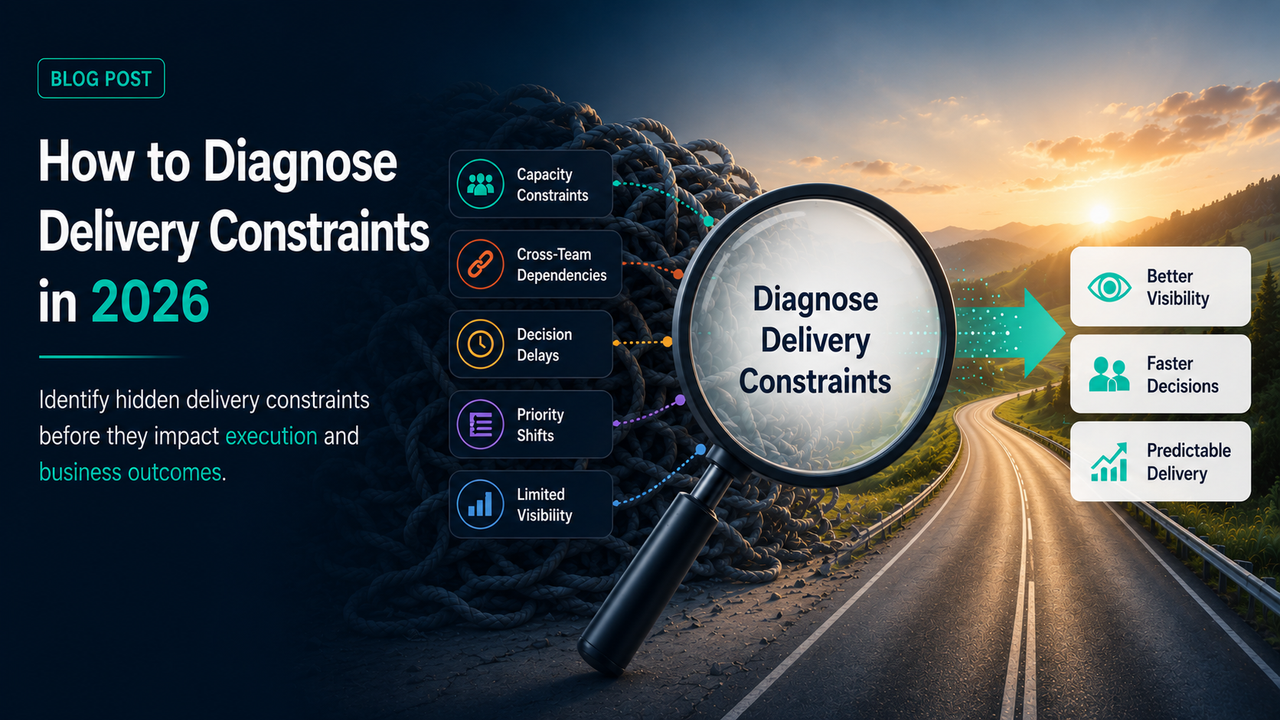
Learn how technology and delivery leaders can diagnose hidden organizational constraints, improve execution visibility, and build more predictable software delivery before delays impact business outcomes.
How to Diagnose Delivery Constraints in 2026
Executive Summary
Hidden delivery constraints are one of the biggest barriers to predictable software delivery. As organizations grow, capacity limitations, cross-team dependencies, and slower decision-making create execution bottlenecks that traditional delivery metrics often fail to reveal. Diagnosing these constraints early helps leaders improve visibility, strengthen alignment, and make better decisions before delivery commitments are impacted.
Why is diagnosing delivery constraints important?
Organizations rarely struggle because teams lack capability. More often, delivery slows because leaders cannot see where execution is constrained. Capacity bottlenecks, hidden dependencies, unclear ownership, and delayed decisions reduce delivery confidence long before they appear on project dashboards.
Execution Clarity the ability to understand where execution is breaking down and why helps leaders identify bottlenecks earlier, strengthen alignment, and make informed decisions before delivery is impacted. By diagnosing delivery constraints across leadership, portfolios, planning, and execution, organizations can improve delivery predictability and business outcomes.
Why do capacity constraints affect predictable delivery?
One of the most common delivery constraints is the gap between planned work and an organization's actual delivery capacity. As companies scale, initiatives often increase faster than the organization's ability to execute them. This results in constant reprioritization, delayed releases, and growing uncertainty around delivery commitments.
Predictable delivery begins by aligning commitments with realistic execution capacity rather than continually increasing workload.
Key takeaway: Organizations improve delivery confidence by understanding capacity before increasing delivery commitments.
How do hidden dependencies create delivery bottlenecks?
As organizations grow, work flows across product, engineering, operations, architecture, security, and customer-facing teams. Although each team may perform well individually, execution often slows where these functions intersect.
Delivery constraints typically result from five connected factors: capacity, cross-team dependencies, decision flow, planning alignment, and execution visibility. These organizational constraints reduce coordination, delay delivery, and make roadmap commitments more difficult to achieve.
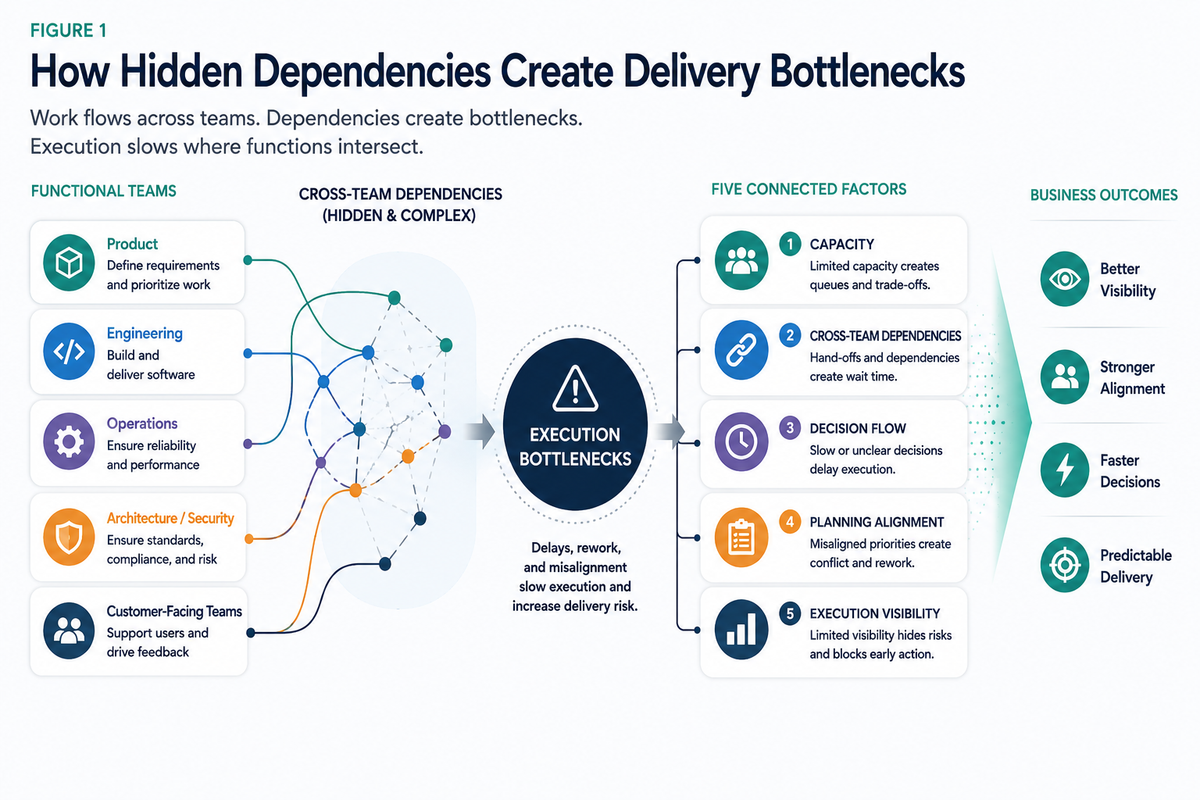
Key takeaway: Delivery bottlenecks are usually created by organizational dependencies rather than individual team performance.
Why does decision flow matter for execution?
Execution depends on timely, informed decisions. As organizations expand, approvals involve more stakeholders, priorities shift frequently, and ownership becomes less clear. These delays reduce momentum and increase delivery risk.
Leaders who improve decision visibility can identify emerging risks earlier, strengthen cross-functional alignment, and make proactive decisions that improve delivery confidence.
Organizations should monitor leading indicators such as Commitment Reliability, Lead Time, Cycle Time, and Roadmap Health to identify execution risks before they impact delivery commitments.
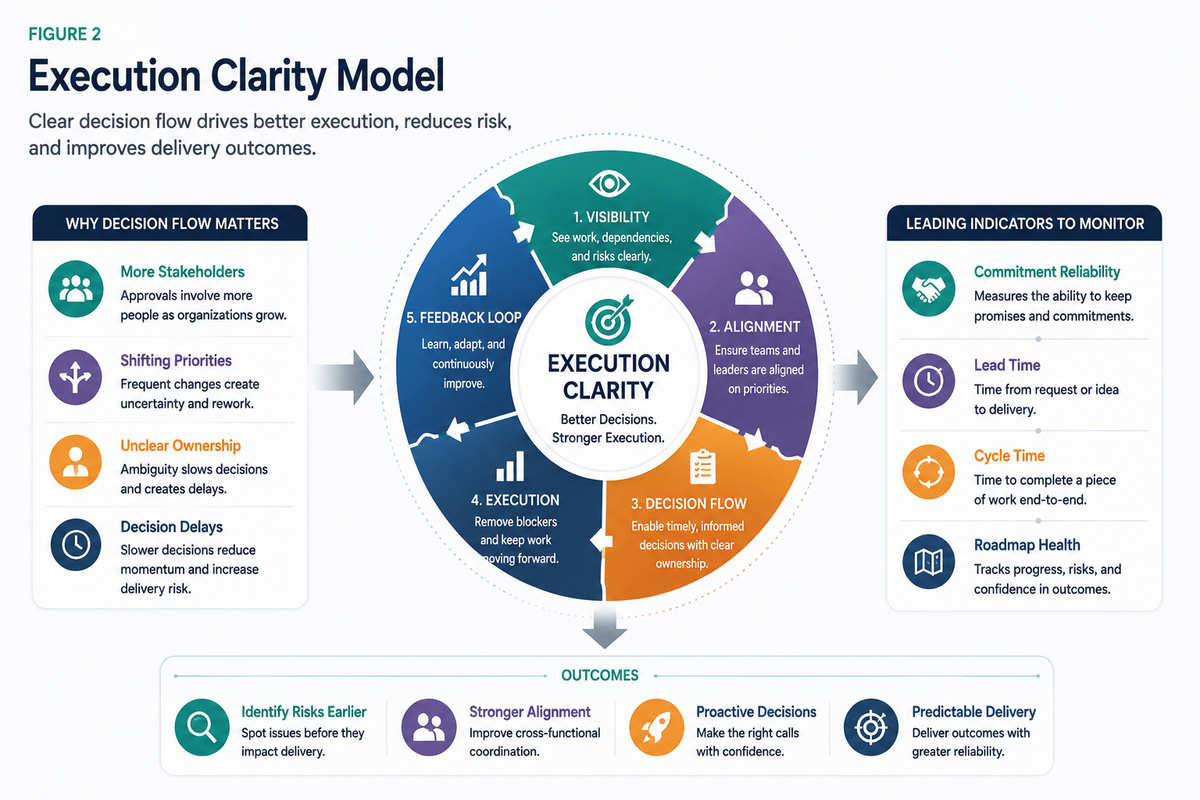
Key takeaway: Faster, clearer decision-making improves execution and reduces delivery slowdowns.
What should leaders do next?
The first step toward predictable delivery is understanding where execution is breaking down. Rather than responding with additional meetings or reporting, organizations benefit from diagnosing the organizational constraints affecting delivery performance.
By combining execution insights with a structured improvement approach, leaders can prioritize the changes that deliver the greatest business impact and build the capabilities needed for long-term delivery success.
Conclusion
Diagnosing delivery constraints is about understanding how organizational complexity affects execution not identifying underperforming teams. As organizations continue to scale, hidden constraints related to capacity, dependencies, and decision flow become increasingly difficult to recognize without the right level of visibility.
Organizations that improve Execution Clarity gain deeper insights into what is slowing execution, enabling leaders to make better decisions, strengthen alignment, and improve delivery performance before small issues become significant business challenges. By identifying delivery constraints early and addressing their root causes, organizations create a stronger foundation for predictable delivery, sustainable growth, and long-term business success.